Mech-Mind Robotics launches Hong Kong IPO, seeks up to HKD 2.7 billion
Mech-Mind Robotics has launched its Hong Kong IPO, aiming to raise up to HKD 2.7 billion (USD 344.4 million) to fund R&D, expand globally, and enhance its AI and 3D vision product portfolio.
Intelligence analysis by Gemini 2.5 Flash
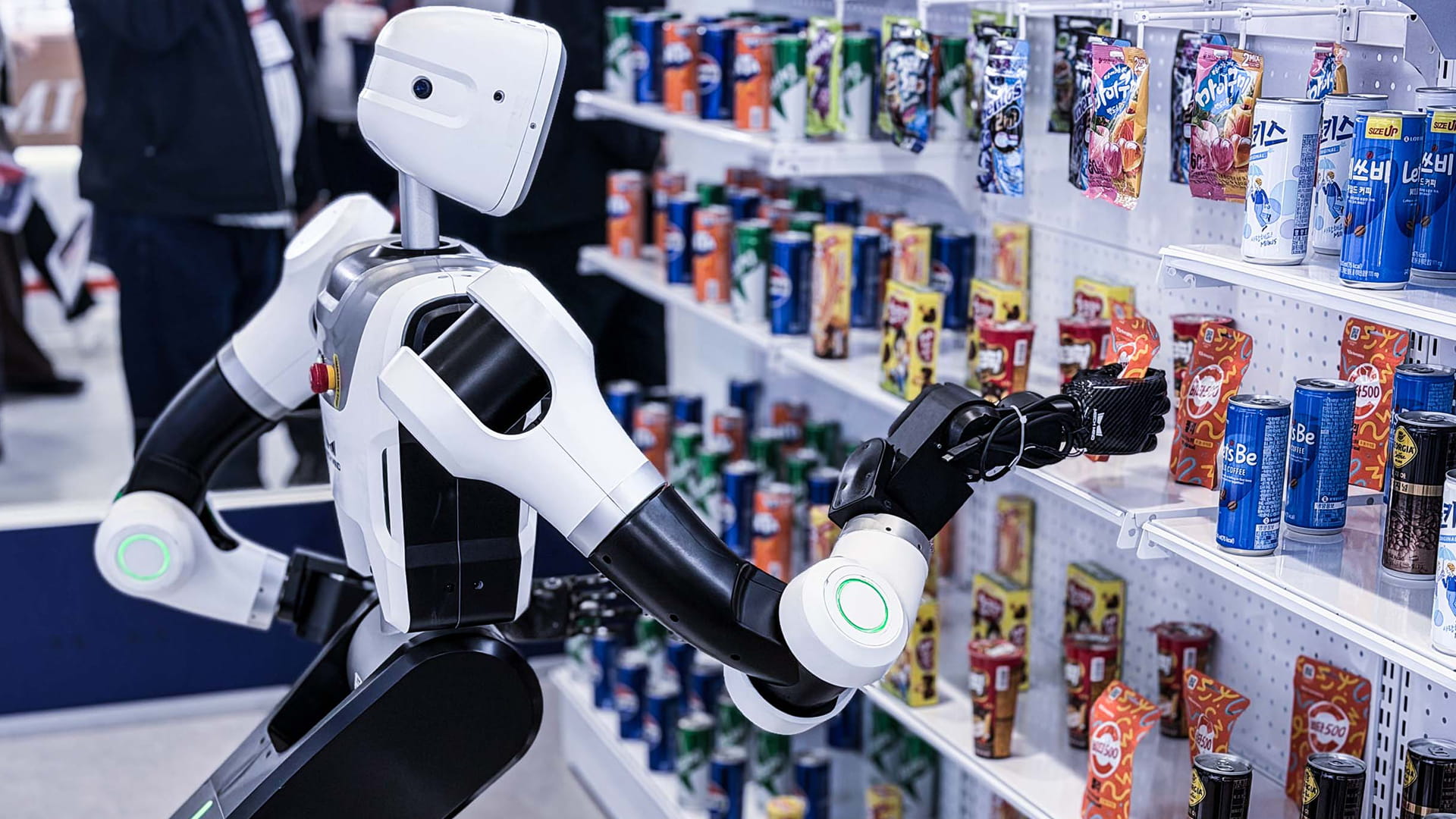
The Chinese robotics company, Mech-Mind Robotics, is offering 23.14 million H shares on the Hong Kong Main Board, with trading expected to commence on September 1. The IPO provides public investors access to a leader in embodied intelligence, focusing on standardized hardware and software components for various robot platforms rather than complete robot manufacturing.
Imagine a robot that needs to pick up toys from a messy room. Instead of building the whole robot, Mech-Mind Robotics makes the 'eyes' (special 3D cameras) and the 'brain' (smart computer programs) that help any robot see the toys, figure out which one to grab, and how to move its 'hand' to pick it up. Now, they're asking people to invest money in their company through a special sale called an IPO, hoping to raise about 2.7 billion Hong Kong dollars to make their robot 'eyes' and 'brains' even smarter and sell them in more places around the world.
Analysis
Mech-Mind Robotics
Mech-Mind Robotics, founded in 2016 by Shao Tianlan, positions itself as a leader in embodied intelligence, developing crucial components that enable robots to perceive, decide, and act. Unlike traditional robot manufacturers, the company focuses on a modular intelligence stack, providing standardized hardware like Mech-Eye industrial 3D cameras and software such as Mech-GPT, a large multimodal model for robotic cognition, and Mech-DLK, a deep learning platform. This approach allows its technology to be integrated across diverse robot platforms, including industrial arms and humanoid robots, emphasizing reusability and broad application.
The company's products leverage 3D vision and AI algorithms, trained on extensive industrial data, to tackle complex challenges like object recognition on reflective surfaces or in random stacking scenarios. This significantly reduces the need for manual programming, enhancing efficiency and adaptability in automated processes. With over 29,000 units deployed globally across nearly 50 countries and regions, Mech-Mind serves more than 100 Fortune Global 500 companies, including major players like BYD and Foxconn, demonstrating its significant market penetration and technological impact across a wide array of industries from automotive to pharmaceuticals.
HKD 2.7 billion
Mech-Mind Robotics' Hong Kong IPO aims to raise a substantial HKD 2.7 billion, equivalent to approximately USD 344.4 million, if shares are priced at the top of the indicative range and the overallotment option is fully exercised. The proceeds from this significant capital injection are earmarked for critical strategic initiatives, including bolstering research and development efforts to innovate further in AI and 3D vision technologies. Additionally, a portion of the funds will be allocated to accelerate the company's overseas expansion, extending its global footprint and market reach.
The offering has garnered strong interest from a diverse group of nine cornerstone investors, collectively committing USD 186 million. Notable commitments include USD 60 million from Baillie Gifford and USD 40 million from Taikang Life Insurance, alongside investments from Invus, Jane Street, and a subsidiary of BYD. This robust investor backing underscores confidence in Mech-Mind's business model and future growth prospects, providing a solid foundation for its public market debut and its ambitious plans for product portfolio broadening and international growth.
China Insights Consultancy
According to an industry report prepared by China Insights Consultancy (CIC) for Mech-Mind's prospectus, the company held a dominant position in the global market for AI and 3D vision-guided non-specialty intelligent robot components in 2025. The report indicates that Mech-Mind ranked first by revenue, capturing approximately 22.1% of this specialized market segment, and also led in shipment volume for the same year. This market leadership highlights the company's significant influence and competitive edge within the rapidly evolving robotics and AI landscape.
Financially, Mech-Mind has demonstrated impressive growth, with revenue increasing from RMB 180.8 million in 2023 to RMB 388.8 million in 2025, representing a compound annual growth rate of 46.6%. Gross profit saw an even more substantial rise, from RMB 70.6 million in 2023 to RMB 251.1 million in 2025, with gross margin improving from 39.1% to 64.6% over the same period. Despite these strong growth metrics and improving profitability, the company remains loss-making, reporting an operational loss of RMB 145.2 million in 2025, indicating continued investment in growth and R&D.
Key points
- Mech-Mind Robotics launched its Hong Kong IPO, seeking up to HKD 2.7 billion (USD 344.4 million).
- The company develops standardized AI and 3D vision components for robots, focusing on perception, decision-making, and manipulation.
- Nine cornerstone investors, including Baillie Gifford and Taikang Life Insurance, committed USD 186 million to the offering.
- Mech-Mind ranked first globally in 2025 for AI and 3D vision-guided non-specialty intelligent robot components by revenue and shipment volume.
- The company reported a 46.6% compound annual revenue growth rate from 2023-2025, but remains loss-making.
The successful IPO and significant capital injection could fuel Mech-Mind's aggressive R&D and global expansion plans, solidifying its leadership in the embodied intelligence market. Increased deployments and product diversification could lead to sustained revenue growth and eventual profitability, further enhancing China's position in advanced robotics.
Despite strong growth, Mech-Mind remains loss-making, and the substantial funds raised will need to be managed carefully to achieve profitability amidst intense competition. Market volatility or slower-than-expected adoption of its technologies in new sectors could hinder its growth trajectory and impact investor returns.