China celebrates PLA's 99th anniversary in Tehran, reaffirms commitment to strategic ties with Iran
China's embassy in Tehran hosted a reception marking the PLA's 99th anniversary, with senior Chinese and Iranian officials reaffirming the comprehensive strategic partnership and calling for dialogue to address West Asia instability.
Intelligence analysis by Llama
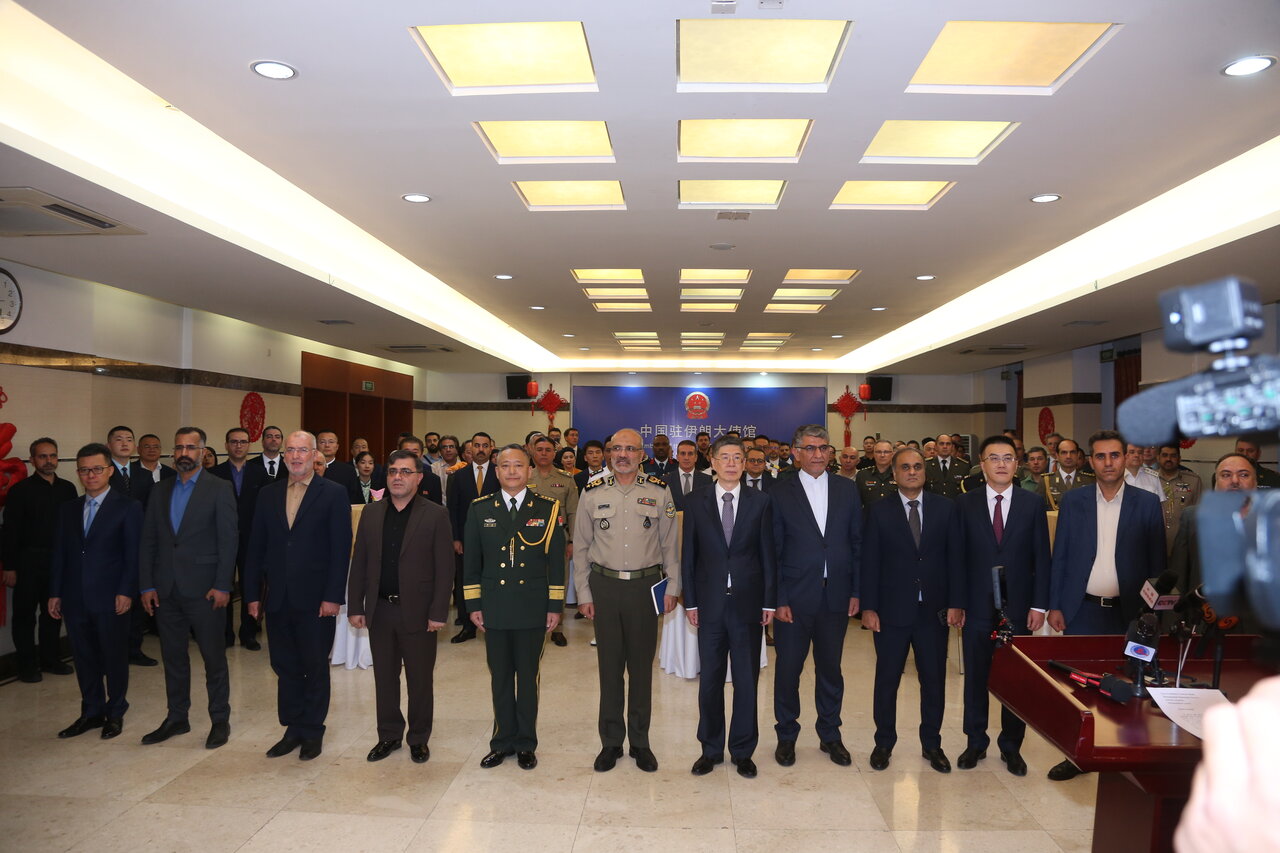
Chinese Ambassador Cong Peiwu and Defense Attaché Hu Xiao used the PLA anniversary reception in Tehran to publicly recommit to China-Iran strategic ties, praise Iranian resilience through recent conflicts, and reiterate Beijing's support for Iran-US dialogue.
China threw a big party in its embassy in Tehran to celebrate its army's birthday, and the speeches were about how much China and Iran are still best friends. The Chinese ambassador said China wants peace talks to fix the fighting in the Middle East, and the Chinese army officer said he stayed in Tehran even during the recent wars to show he stands with Iran.
Analysis
A Diplomatic Stage with Strategic Timing
The choice to mark the People's Liberation Army's 99th anniversary inside the Chinese Embassy in Tehran was never going to be a routine celebration. By anchoring the reception on July 21, 2026, with the Iranian Armed Forces' deputy for international cooperation in the room, Beijing converted a founding-day ritual into an open reaffirmation of its comprehensive strategic partnership with Iran. According to the Tehran Times, Ambassador Cong Peiwu used the occasion to invoke President Xi Jinping's four proposals for West Asia — peaceful coexistence, respect for sovereignty, adherence to international law, and a balanced development-security approach — language that maps directly onto Iran's own framing of foreign policy. The optics matter: a PLA birthday is normally an internal Chinese event; staging it in Tehran is meant to be read as a message to Washington and the Gulf capitals that the Beijing-Tehran axis remains intact.
Reading the Subtext of Recent Wars
The most revealing passage came from Defense Attaché Senior Colonel Hu Xiao, who said he had remained at the embassy through what he called the 12-day war and this year's 40-day war, framing the events as wars experienced rather than as foreign policy abstractions. That phrasing, carried by the Iranian state-linked outlet, is a quiet signal: China is publicly acknowledging the conflicts hit Iran directly, and is positioning itself as a witness rather than a bystander. Hu's call for a comprehensive ceasefire, his sympathy for Iranian suffering, and his explicit support for Iran-US dialogue all suggest Beijing is hedging — it wants the partnership to deepen on military and economic tracks, but it does not want an open-ended war on its partner's soil to derail its broader regional diplomacy, including its recent Saudi-Iranian rapprochement. The dual message is stability now, partnership always.
The Strategic Partnership in Practice
Both speakers leaned on institutional language — comprehensive strategic partnership, political mutual trust, practical cooperation, people-to-people exchanges — but the operative word was "expand." Cong said China is committed to expanding political trust and practical cooperation; Hu highlighted expanding military-to-military engagement including high-level exchanges. For an Iran desk audience, the takeaway is that Beijing is no longer treating Iran purely as a sanctions-busting trade partner, the way it was framed during the height of maximum pressure. Military diplomacy, peacekeeping co-participation rhetoric, and explicit invocation of shared positions on sanctions and "hegemonic aggression" indicate the relationship is being elevated across more domains at once. The risk for Tehran is dependence; the upside is that, at a moment when its conventional deterrence has been tested, it has one great-power patron visibly unwilling to look away.
Key points
- Chinese Embassy in Tehran hosted a reception on July 21, 2026 marking the PLA's 99th anniversary, with Iranian Armed Forces officials attending.
- Ambassador Cong Peiwu invoked Xi Jinping's four proposals for West Asia and reiterated Beijing's support for Iran's sovereignty and regional dialogue.
- Defense Attaché Hu Xiao said he stayed in Tehran through a 12-day war and a 40-day war, framing China as a witness to recent conflicts.
- China publicly backed Iran-US dialogue and a comprehensive ceasefire while opposing sanctions and 'hegemonic aggression'.
- Both sides signaled expansion of military cooperation, high-level exchanges, and the broader comprehensive strategic partnership.
If Beijing's call for Iran-US dialogue and a comprehensive ceasefire gains traction, Iran could secure diplomatic breathing room while preserving the partnership and reconstruction resources. Continued expansion of military-to-military exchanges could also give Tehran access to training, equipment channels, and diplomatic cover that reduce its isolation.
Closer alignment with China also deepens Iran's exposure if Beijing ever recalibrates its Middle East policy or presses Tehran to make concessions in any future US dialogue. The framing of recent wars as a shared experience could also harden US and Gulf perceptions that China is a partisan actor, complicating any sanctions relief track.