Chinese ‘hardship camps’ see children chop wood, feed pigs to learn family appreciation
Chinese parents are sending their children to "hardship summer camps" in rural areas to perform farm work, aiming to teach them the value of labor and foster appreciation for their families.
Intelligence analysis by Gemini 2.5 Flash
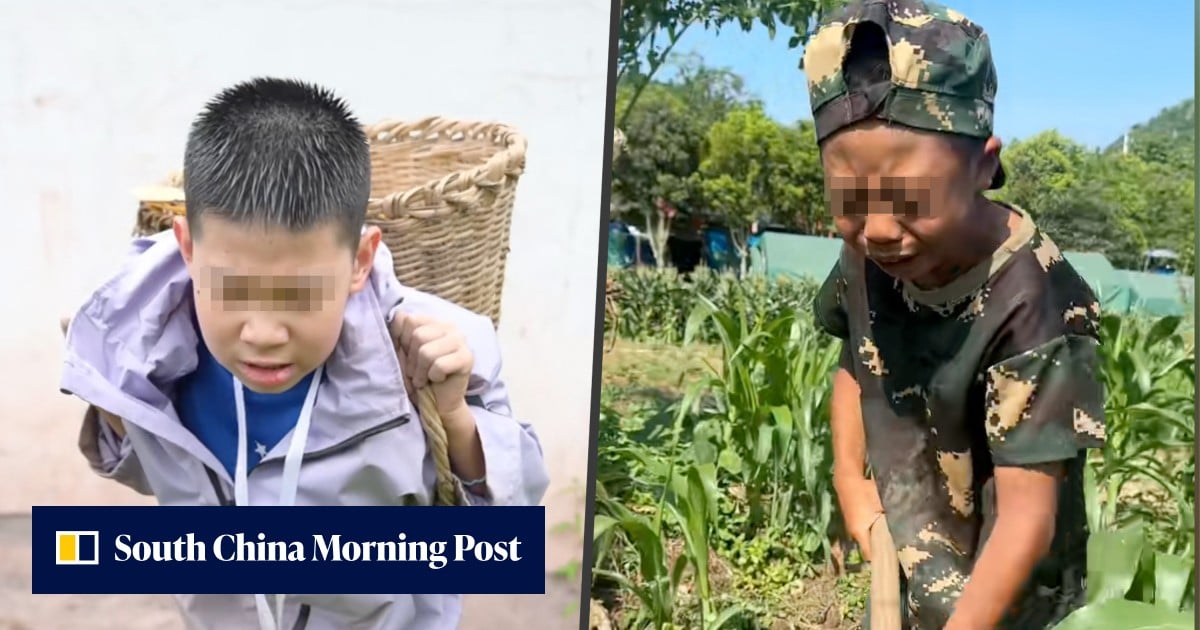
These popular camps, primarily in southwestern China, involve children paying to engage in strenuous tasks like digging potatoes, peeling bark, and feeding pigs, mirroring daily farm life. The goal is to instill an understanding of hard work and money's worth, often leading children to tears.
Imagine your parents sending you to a special summer camp where you have to do farm chores like digging up potatoes or feeding pigs, even though you usually live in the city. It's like a tough adventure designed to show you how much work goes into making food and earning money, so you learn to appreciate everything your family does for you, kind of like a superhero training camp for real life.
Analysis
Chinese parents are increasingly turning to unconventional methods to instill values in their children, a notable shift from purely academic pursuits. The rise of 'hardship summer camps' signifies a growing concern among parents about their children's perceived lack of appreciation for hard work and the realities of earning a living. These camps are designed to expose urban children to the rigors of rural life, tasks that are far removed from their daily experiences.
Sichuan
These unique educational programs are predominantly situated in China's southwestern provinces, specifically Sichuan, Guizhou, and Yunnan. This geographical clustering is likely influenced by the region's relatively pleasant summer climate, which makes outdoor activities more feasible and comfortable for participants. The choice of these rural settings provides an authentic backdrop for the immersive farm experiences that are central to the camps' curriculum.
The activities assigned to the children are deliberately crafted to mirror the daily duties of actual farmers. Participants engage in tasks such as digging and selling potatoes, peeling bark from trees, and tending to livestock like feeding pigs. These hands-on experiences are intended to be physically demanding and emotionally challenging, pushing children beyond their comfort zones and directly confronting them with the effort required for basic sustenance and agricultural production.
Thousands of Yuan
A striking aspect of these hardship camps is the financial model: parents invest thousands of yuan, equivalent to hundreds of US dollars, for their children to participate. This payment structure contrasts sharply with the traditional concept of labor, where workers receive wages for their efforts. Instead, here, the 'labor' is a paid educational experience, underscoring the value placed on this specific type of learning by affluent urban families.
Camp organizers explicitly state that their primary objective is to instill an appreciation for the challenges associated with labor and the process of earning money. This focus suggests a societal recognition that modern urban lifestyles may inadvertently shield children from understanding the fundamental connection between effort and reward. The camps aim to bridge this gap by providing a tangible, albeit temporary, experience of manual work and its economic implications.
ettoday.net
The visibility of these camps, as evidenced by photo credits like ettoday.net, indicates a broader public interest and media coverage of this parenting trend. Such exposure suggests that the concept resonates with a significant portion of the Chinese populace, sparking discussions about child development, resilience, and the perceived 'softness' of younger generations raised in increasingly comfortable environments.
The emotional impact on the children, often described as being brought to tears by the strenuous activities, is a key component of the camp's intended effect. These moments of struggle are framed as opportunities for growth and self-discovery, ultimately leading to a deeper appreciation for their families' efforts and the comforts of their urban homes. The camps, therefore, serve as a stark reminder of the disparities between urban and rural life, and an attempt to impart empathy and gratitude through direct experience.
Key points
- Chinese parents are sending children to "hardship summer camps" for farm work.
- Camps aim to teach children the realities of life and foster family appreciation.
- Activities include digging potatoes, peeling bark, and feeding pigs, mirroring farmer's tasks.
- Parents pay thousands of yuan for this experience, unlike actual farmhands.
- Camps are popular in southwestern provinces like Sichuan, Guizhou, and Yunnan.
These camps could successfully instill a stronger work ethic and a deeper appreciation for family efforts in children, potentially fostering more resilient and grateful future generations. The experience might also bridge the urban-rural divide by exposing city kids to agricultural realities.
The camps, while well-intentioned, might be seen as performative or exploitative if not properly managed, potentially traumatizing children or failing to impart genuine lessons if the experience is too brief or superficial. There's also a risk of reinforcing a romanticized or overly harsh view of rural life without addressing systemic issues.