Dispute Over Sand and Gravel: What Happens Next With Gravel Extraction on the Lower Rhine?
Municipalities, residents and industry are heading to court over 17 planned new gravel pits in the Lower Rhine region.
Intelligence analysis by GPT-5.4 Mini
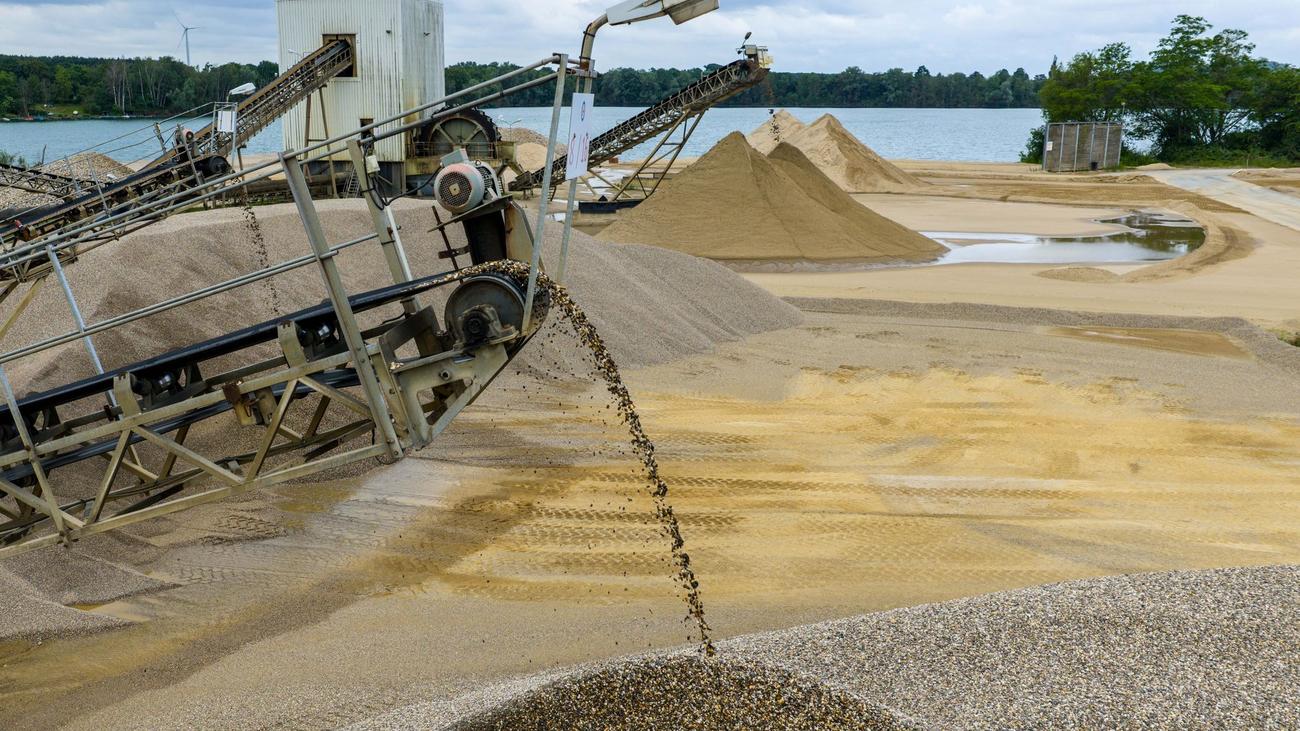
The Lower Rhine’s gravel boom has become a legal fight over land use, housing needs and landscape protection. On Friday, the OVG in Münster will hear competing lawsuits over the Ruhr regional plan that governs where new extraction sites may be placed.
This is a fight over where to dig up sand and gravel, the stuff used to build roads and houses. Some towns say too much land is being turned into giant holes, while companies say there may not be enough rock for buildings and bridges.
Analysis
What is being disputed
Sand and gravel are essential for construction, but extraction at the Lower Rhine has left behind large pits and lakes. Municipalities and residents in the Kreis Wesel area say the planned expansion goes too far and would further damage a landscape they describe as highly valuable.
The planning conflict
The current Regional Plan Ruhr allows 17 new extraction areas in the Kreis Wesel district. The Kreis Wesel and the municipalities of Kamp-Lintfort, Rheinberg, Neukirchen-Vluyn, Alpen, Hünxe and Hamminkeln are challenging that plan because they believe the future demand for sand and gravel was forecast too high. Their goal is to reduce the amount of land reserved for mining.
At the same time, the industry is also suing, but in the opposite direction. The company Holemans from Rees argues that too few extraction areas were designated, especially on the right bank of the Lower Rhine. The company says the area is important because of its proximity to the northern Ruhr region and its concrete industry.
Why the industry says it matters
The article quotes the industry initiative "Zukunft Niederrhein" as warning that without sand and gravel there can be no affordable housing, functioning infrastructure, or many energy-transition and climate-protection projects. It also says prices for sand and gravel have risen sharply over the past decade because supply has become tighter.
What happens next
The Higher Administrative Court in Münster is scheduled to hear the case on Friday, June 12, and to announce a judgment the same day. If the court strikes down all or part of the regional plan, the 17 planned areas could initially be removed from the map and the regional planning authority would have to revise its work. The article notes, however, that the practical consequences would still remain unclear and the dispute could continue through new permit applications and further objections.
Key points
- Municipalities, residents and the industry are all suing over the Regional Plan Ruhr, but for opposite reasons.
- The plan currently allows 17 new gravel extraction sites in the Kreis Wesel district.
- Local authorities argue that too much land is being reserved and that the landscape would be permanently damaged.
- Industry says sand and gravel are essential for housing, infrastructure and energy-transition projects.
- The court in Münster is expected to hear the case and announce a ruling on the same day.
If the court tightens the plan, local communities could get more protection for farmland and the historic landscape along the Lower Rhine. A clearer ruling could also force planners to set more precise rules for where extraction is allowed.
If the court invalidates the plan, the region could face another round of planning and legal disputes, delaying certainty for both residents and companies. The article also suggests that, without clearly defined extraction zones, new permit battles could simply move to the next stage.