Gap in Trump's Sanctions; Billions of Dollars Linked to Iran Pass Through US Banks
Despite Trump's sanctions, Iran moves billions via US banks through shell companies. Meanwhile, the US Energy Secretary suggests a nuclear deal might not happen, hinting at regime change or policy shift as goals.
Intelligence analysis by Gemini 2.5 Flash Lite

While the Trump administration claims success in pressuring Iran, reports reveal significant financial loopholes. Iran uses shell companies and foreign banks to channel billions through US financial institutions, undermining sanctions. Concurrently, US officials signal a potential shift away from a nuclear deal, prioritizing the disruption of Iran's nuclear capabilities and potentiall…
Imagine Iran is trying to get money, but the US has put up a big fence around it. However, Iran found secret tunnels under the fence, using fake companies and banks in other countries to send money that ends up near the US. Meanwhile, a US official said maybe they won't make a deal with Iran to stop its nuclear program, and might try to stop it by weakening Iran's ability to build it.
Analysis
US Banks as a Weak Link
The Trump administration's strategy to isolate Iran financially faces a significant challenge from within the US financial system itself. According to reports, billions of dollars linked to Iran are processed annually through US brokerage accounts, facilitated by a network of shell companies and exchange houses established in Hong Kong and Dubai. These entities, operating through banks in China, the UAE, and other nations, manage to clear dollar transactions without directly revealing their connection to Iran. While Tehran has diversified its trade to include the Chinese Yuan and cryptocurrencies, the dollar remains crucial for foreign trade, supporting regional allies, and acquiring specific goods. The US Treasury's efforts to sanction Egyptian and Turkish banks are part of a broader campaign to compel international financial institutions to sever ties with Iran. However, this strategy risks alienating countries and pushing them towards alternative financial systems, potentially weakening the dollar's dominance, which underpins US sanctions power.
Shifting Stance on Nuclear Deal
Amidst efforts to tighten financial controls, US officials are sending mixed signals regarding the future of Iran's nuclear program. Energy Secretary Rick Perry has publicly stated that a nuclear deal with the current Iranian government may not materialize. He suggested that preventing Iran from acquiring nuclear weapons might necessitate 'destroying Iran's capabilities' rather than pursuing a diplomatic agreement. Perry indicated that achieving this goal might require waiting for a 'next government in Iran.' This statement implies a potential shift in US policy, moving away from a negotiated settlement towards a strategy of sustained military and economic pressure, with the explicit aim of either altering the regime's policies or facilitating its overthrow. The administration's rhetoric suggests a willingness to accept a prolonged period of confrontation without a clear diplomatic resolution.
Redefining the 'New Normal' in the Strait of Hormuz
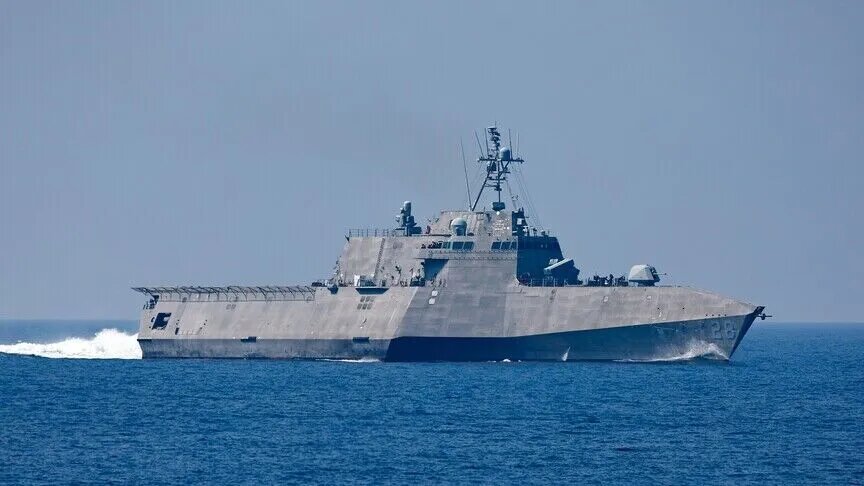
The ongoing tensions in the Strait of Hormuz, a critical chokepoint for global oil trade, are also being reframed. US officials have asserted control over the waterway, despite Iran's recent actions against commercial shipping. The administration's objective appears to be the complete cessation of Iran's oil exports and the imposition of severe economic pressure. This pressure is intended to force either a change in the Iranian government's behavior or a change in the government itself. While diplomatic channels are reportedly still open, and a negotiated solution is preferred by President Trump, the recent escalations and the Energy Secretary's statements suggest a potential normalization of military confrontation in the region. The US appears to be preparing for a scenario where containment of Iran is pursued through sustained pressure, without the expectation of a formal diplomatic breakthrough.
Key points
- Iran is reportedly using shell companies and foreign banks to move billions of dollars through US financial institutions, bypassing sanctions.
- US Energy Secretary Rick Perry suggested a nuclear deal with Iran may not happen, indicating a focus on dismantling Iran's nuclear capabilities.
- The US administration's strategy appears to aim for either a change in Iran's policies or its government through economic and military pressure.
- Tensions in the Strait of Hormuz persist, with the US asserting control despite Iranian actions against shipping.
- The reliance on dollar transactions, even by Iran, highlights the complex interplay between sanctions and the global financial system.
If Iran's financial networks are effectively disrupted and its nuclear program is demonstrably halted through pressure, it could lead to a de-escalation of regional tensions and a more stable global energy market. A potential shift in Iranian policy or government could also open new avenues for diplomacy and regional cooperation.
The continued circumvention of sanctions and the lack of a diplomatic resolution could lead to further escalation of military confrontation in the Strait of Hormuz and broader regional conflict. This could destabilize energy markets, increase global economic uncertainty, and potentially lead to a more aggressive pursuit of nuclear capabilities by Iran.