US, South Korea, Japan kick off 5-day joint military exercise
The United States, South Korea, and Japan have commenced a five-day joint military exercise, "Freedom Edge," in international waters near Jeju island to bolster their operational and joint response capabilities.
Intelligence analysis by Gemini 2.5 Flash
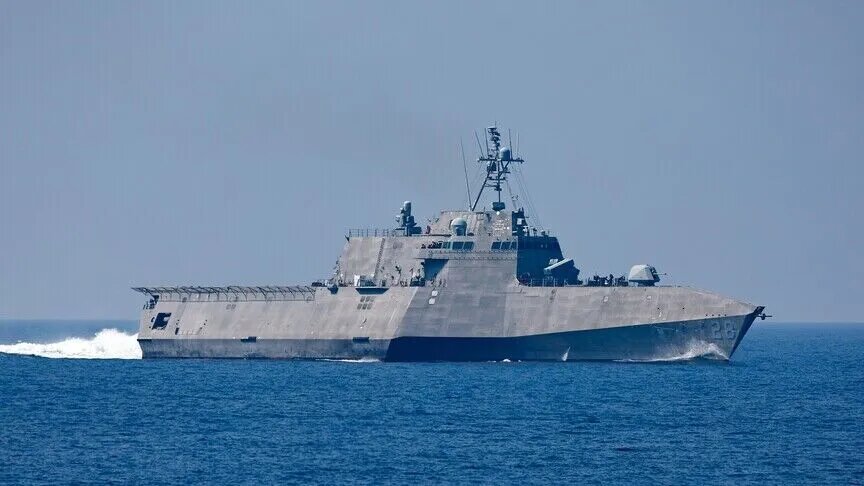
The trilateral drills, involving significant naval and air assets, are designed to enhance deterrence and response against North Korean nuclear and missile threats, aiming to safeguard regional peace and stability, despite a recent shortening of a bilateral US-South Korea exercise.
Three big countries, the US, South Korea, and Japan, are playing a five-day game of pretend war with their ships and planes near South Korea. They're practicing working together to be ready if North Korea causes trouble with its rockets. One of the US's biggest ships, an aircraft carrier, isn't there because it's busy with something else far away, fighting a war against Iran.
Analysis
The "Freedom Edge" exercise represents a significant trilateral military endeavor by the United States, South Korea, and Japan, designed to bolster their collective defense posture in the Indo-Pacific region. Kicking off in international waters near South Korea's southern island of Jeju, the five-day drill is explicitly framed as a response to the persistent nuclear and missile threats emanating from North Korea. This joint operation underscores the commitment of the three allies to regional stability and their interoperability across various domains, including maritime, air, and cyber warfare. The exercise involves substantial military assets, such as Aegis-equipped destroyers, maritime patrol aircraft, and fighter jets, signaling a robust display of force and coordination. The participation of specific vessels like South Korea's ROKS Yulgok Yi I and ROKS Seoae Ryu Seong-ryong, Japan's Atago and Asahi destroyers, and the US Navy's USS Benfold highlights the advanced capabilities being integrated into these drills. The timing is notable, following a shortened bilateral exercise between the US and South Korea, which was reportedly an attempt to encourage North Korea back to diplomatic talks. However, the continuation of this trilateral exercise suggests a dual strategy of diplomatic overtures coupled with strong military deterrence.
Freedom Edge
The "Freedom Edge" exercise is a five-day joint military drill involving the United States, South Korea, and Japan, commencing in international waters east and south of South Korea's southern island of Jeju. Its primary objective, as stated by South Korea's Joint Chiefs of Staff (JCS), is to enhance the operational and joint response capabilities of the three nations across multiple domains, including maritime, air, and cyber. This exercise is a direct measure aimed at strengthening deterrence and response mechanisms against the evolving nuclear and missile threats posed by North Korea, thereby safeguarding regional peace and stability. The drills are meticulously overseen by a joint exercise control group to ensure systematic and safe execution, reflecting the complexity and strategic importance of the operation.
Jeju
The location of the exercise, specifically in international waters east and south of South Korea's southern island of Jeju, is strategically significant. Jeju is a key geographical point in the region, providing a broad operational area for naval and air assets. This choice of location allows for comprehensive drills that can simulate various scenarios, including those involving potential incursions or missile defense operations. The deployment of six Aegis-equipped destroyers, along with maritime patrol aircraft, fighter jets, and refueling tankers, underscores the scale of the exercise in this critical maritime zone. The specific mention of South Korean destroyers like the 7,600-ton ROKS Yulgok Yi I and ROKS Seoae Ryu Seong-ryong highlights the host nation's substantial contribution to the trilateral effort in its immediate vicinity.
USS Benfold
The US Navy's 6,900-ton Arleigh Burke-class USS Benfold was noted to have arrived in Busan, South Korea, prior to the drills, indicating its likely participation. However, a crucial detail from the article is the absence of a US aircraft carrier in the "Freedom Edge" exercise. This absence is explicitly attributed to "the ongoing US war against Iran," according to sources cited in the report. This particular detail provides a direct link to Iran, suggesting that US military resources and strategic focus are currently divided between commitments in the Indo-Pacific and ongoing engagements in the Middle East. The decision to not deploy a carrier to this significant trilateral exercise highlights the perceived urgency and resource demands of the US's operations concerning Iran, potentially influencing the scope and impact of its participation in other global security theaters.
Key points
- The US, South Korea, and Japan initiated a five-day joint military exercise named "Freedom Edge."
- The drills are taking place in international waters east and south of South Korea's Jeju island.
- The exercise aims to enhance operational and joint response capabilities against North Korean nuclear and missile threats.
- Major maritime and air assets, including Aegis-equipped destroyers, maritime patrol aircraft, and fighter jets, are involved.
- No US aircraft carrier is participating due to "the ongoing US war against Iran."
The joint military exercise could significantly enhance the deterrence capabilities of the US, South Korea, and Japan against North Korean threats, potentially leading to greater regional stability and reducing the likelihood of provocations. Improved interoperability among the allies might also strengthen their collective response to future security challenges.
The drills could escalate tensions with North Korea, potentially provoking a strong reaction or further missile tests, thereby destabilizing the region. Furthermore, the US's stated diversion of an aircraft carrier due to an "ongoing war against Iran" suggests stretched resources, which could be perceived as a weakness by adversaries in both regions.
Market signals
- OIL The article mentions an "ongoing US war against Iran" and related news about oil price rises due to US-Iran trade fire, indicating heightened geopolitical risk in a key oil-producing region.
AI-generated analysis of potential market relevance. Not financial advice.