Gerhard Schröder Visits Putin at the Kremlin: A Friend, a Good Friend
Putin met former German chancellor Gerhard Schröder in the Kremlin and again floated him as a trusted go-between on Ukraine, despite strong EU skepticism.
Intelligence analysis by GPT-5.4 Mini
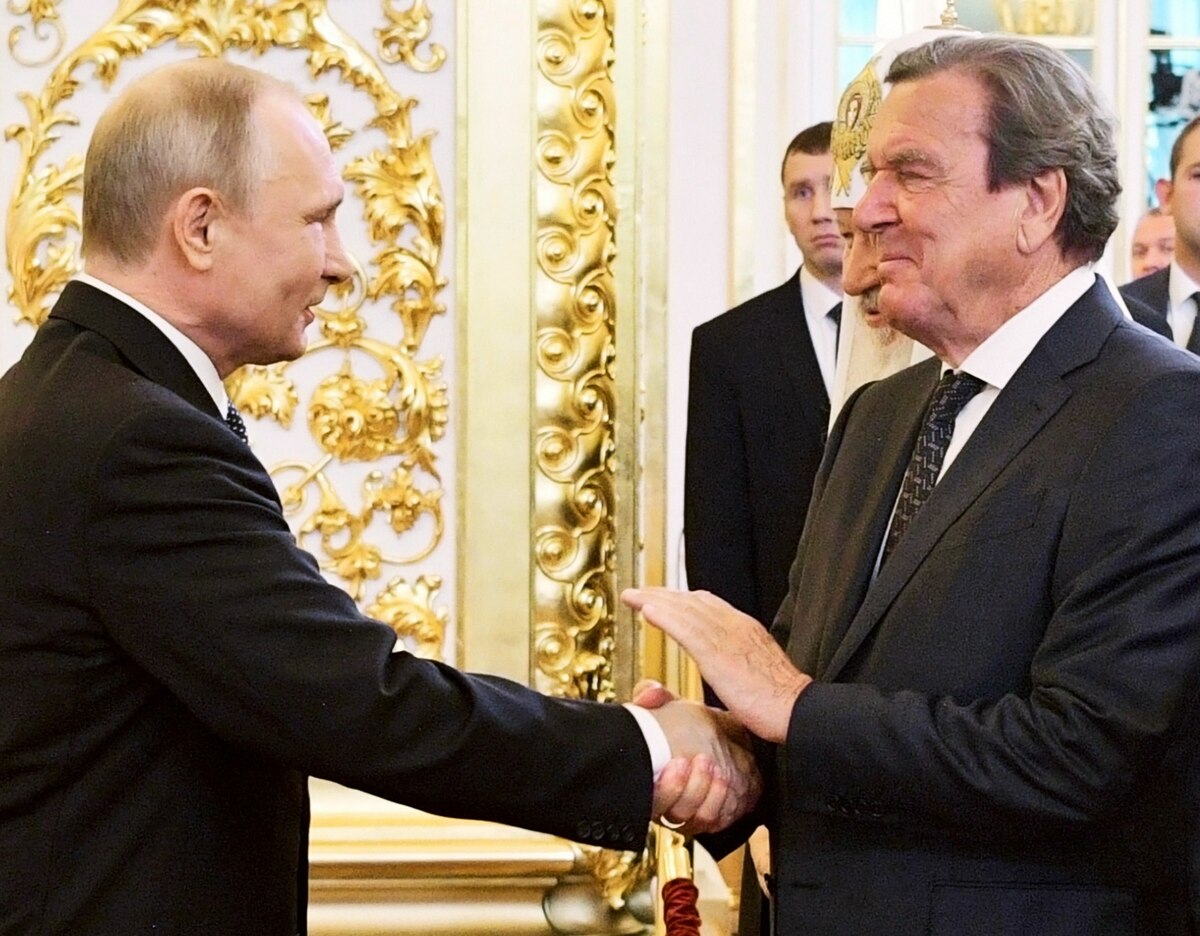
The Kremlin says Putin held a one-on-one with Schröder in Moscow and cast him as a trustworthy intermediary for any future Russia-EU talks. The piece places the meeting in the context of stalled Ukraine diplomacy and deep distrust between Brussels and Moscow.
A former German leader went to see Russia’s president, who still treats him like a trusted old friend and possible messenger. It is like asking a familiar classmate to carry a note between two kids who are not talking, but many people doubt that will work.
Analysis
What happened
The Kremlin said Vladimir Putin met former German chancellor Gerhard Schröder in Moscow for a private talk. Putin’s foreign policy aide, Yury Ushakov, called it a good conversation, but did not provide details about possible negotiations or any concrete results.
Why Schröder came up again
Putin publicly repeated his view that any intermediary between Russia and the EU would need to be a neutral person who can be trusted. He also said he was surprised that his suggestion of Schröder as a mediator caused such a stir in Germany. The article frames Schröder as an old political ally of Putin, which is why the idea is politically loaded in Berlin and Brussels.
European pushback and the wider context
The report says the EU has little appetite for appointing an outside intermediary from outside government. EU foreign policy chief Kaja Kallas warned that Russia wants to draw the EU into a trap by making this a topic of discussion. At the same time, the article says the German government expects that talks with Russia over ending the war may become possible in the coming months, though not soon. It also says Germany, France, and the United Kingdom are likely to remain important in any European format, with leaders from the three countries set to consult with Volodymyr Zelenskyy in London.
The story is less about immediate diplomacy than about positioning: Putin is testing a familiar political figure as a possible channel, while European officials are signaling that they do not want Moscow to set the rules for who speaks for Europe.
Key points
- Putin met Gerhard Schröder privately in the Kremlin, and the Kremlin described the conversation as good.
- Putin again suggested Schröder could serve as a trusted intermediary between Russia and the EU.
- EU officials, including Kaja Kallas, have warned that Russia may be trying to lure the EU into a trap by forcing debate over a mediator.
- The German government still sees a possible opening for talks with Russia in the coming months, but not immediately.
- Germany, France, and the UK are expected to remain important in shaping any European negotiating format.
If a credible European format for talks emerges, the article says it could help open a window for discussions with Russia in the coming months. A common approach from Germany, France, and the UK could also give Europe a clearer voice in any future negotiations.
The Schröder talk could keep attention on Russia’s preferred intermediaries instead of on substance, which EU officials already view with suspicion. If the debate hardens, it may add more mistrust around any future contact with Moscow rather than making talks easier.