Here be dragons: does moving power to the north work?
Andy Burnham plans to establish 'No 10 North' in Manchester to devolve power, mirroring the BBC's successful move to Salford. Other government bodies and Channel 4 have also relocated operations outside London.
Intelligence analysis by Gemini 2.5 Flash Lite
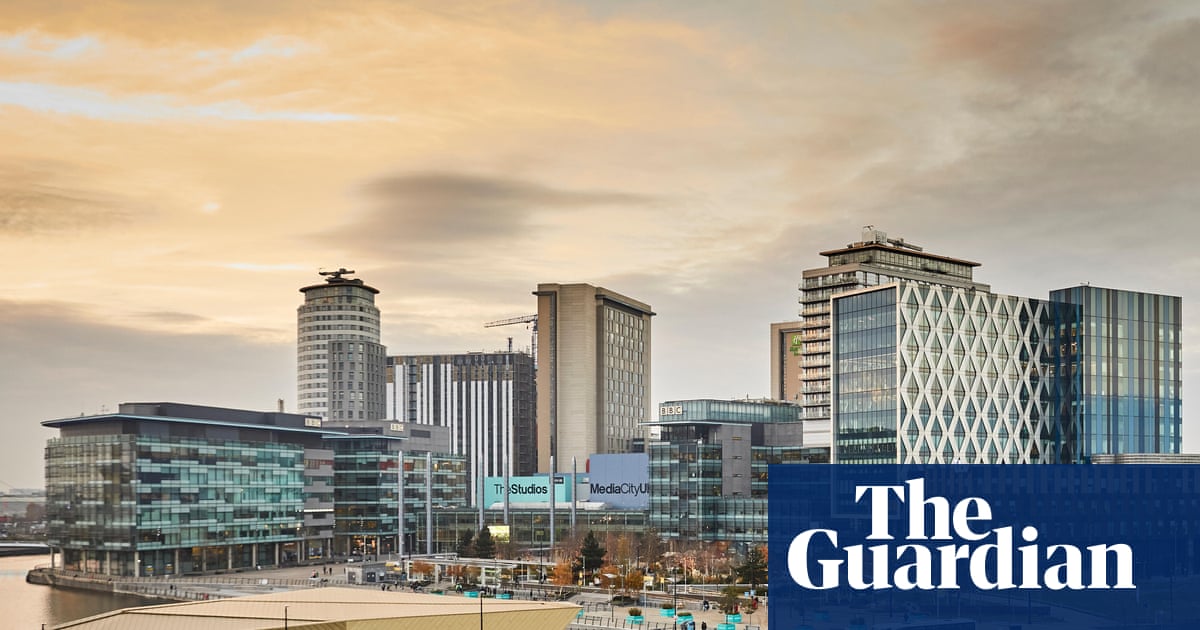
Fifteen years after the BBC's significant move to Salford, which revitalized the area and created a media hub, Andy Burnham proposes 'No 10 North' in Manchester to decentralize government power. This initiative follows similar relocations by Channel 4, HMRC, and the ONS, suggesting a trend towards de-centralizing major institutions from London.
Imagine a big company deciding to move its main office from a super busy city to a quieter town. Some people worried it wouldn't work, but the company moved a lot of its jobs there. Now, the town has grown with new businesses, and the company is doing great! This idea is like that, but for the government, moving some of its work to a city in the north of England to help that area grow.
Analysis
The BBC's Salford Gambit: A Precedent for Decentralization
The BBC's decision in 2004 to relocate a substantial portion of its operations to Salford, Greater Manchester, was met with considerable skepticism. Senior staff and prominent figures like Jeremy Clarkson expressed doubts about retaining talent and maintaining national influence from a non-capital location. However, fifteen years on, MediaCity UK stands as a testament to the plan's success. It is now a thriving 200-acre media and technology hub, hosting 3,500 BBC staff and spurring the growth of 250 other creative and tech businesses. This transformation demonstrates that a bold, wholesale relocation, rather than a piecemeal approach, can fundamentally shift an organization's center of gravity and foster significant regional development.
'No 10 North' and the Evolving Landscape of Governance
Inspired by such precedents, Andy Burnham's proposal for 'No 10 North' in Manchester aims to create a dedicated government presence outside London. This initiative seeks to decentralize power and resources, positioning Manchester as a potential 'nerve centre of a rewired Britain.' The plan echoes a broader government commitment to relocating tens of thousands of civil servants, with examples like Channel 4's headquarters in Leeds, HMRC's major hub in Newcastle, and the Office for National Statistics' move to Newport. The Darlington Economic Campus, housing nine government departments including the Treasury, further illustrates this trend.
Keys to Successful Decentralization: Leadership and Scale
According to Alice Webb, who oversaw the BBC's move, the success hinged on strong leadership and a commitment to a significant scale of relocation. Moving entire departments, such as BBC Children's, 5 Live, 6 Music, and BBC Sport, was crucial to meaningfully shifting the broadcaster's operational core. Similarly, the Treasury's hub in Darlington is seen as successful due to senior ministerial backing, with Chancellor Rachel Reeves referring to it as a 'No 11 of the North.' This suggests that sustained, high-level political commitment is vital for such decentralization projects to overcome inertia and achieve their intended impact.
Key points
- Andy Burnham plans to establish 'No 10 North' in Manchester to decentralize government power.
- The BBC's successful relocation to Salford's MediaCity serves as a precedent for this initiative.
- Other major organizations like Channel 4, HMRC, and the ONS have also moved operations out of London.
- Successful decentralization requires strong leadership and a significant scale of relocation.
- The Darlington Economic Campus demonstrates a government commitment to regional hubs.
If successful, 'No 10 North' could lead to a more balanced distribution of economic and political influence across the UK, fostering regional growth and creating new opportunities outside the capital. The precedent set by the BBC's move suggests that such decentralization can catalyze significant local development and innovation.
Skepticism surrounding 'No 10 North' highlights potential challenges, including resistance from established London-based institutions and the risk of the initiative being perceived as performative rather than substantive. Without strong, sustained leadership and a clear mandate, the plan may fail to achieve meaningful devolution of power.