Humpback Whale: Autopsy of the Stranded Whale Is Set to Begin
Veterinarians and whale experts are set to examine the dead humpback whale Timmy/Hope on the Danish island of Anholt to determine how it died.
Intelligence analysis by GPT-5.4 Mini
The whale that drew attention in Germany after repeated strandings off the Baltic coast is now the subject of an autopsy in Denmark. Experts will take DNA samples and look for clues such as fishing gear damage, though some answers may already be lost.
A very big whale got stranded, then died, and experts are now doing a medical check-up on its body to learn why. It is like trying to solve a mystery after the clues have started to fade in the sun.
Analysis
What happens next
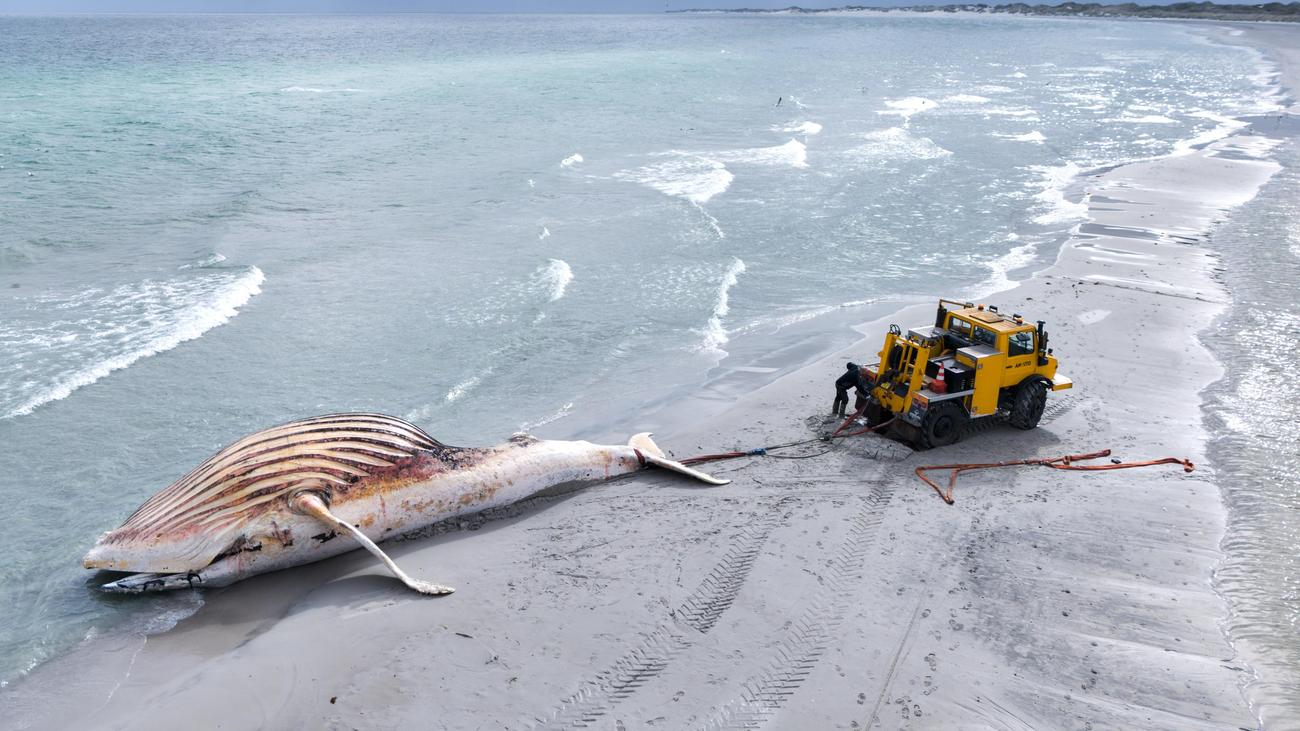
A small team of veterinarians and whale specialists is scheduled to begin an autopsy on the dead humpback whale on the Danish island of Anholt in the afternoon. The examination is expected to take about six hours. Investigators plan to collect DNA samples and try to narrow down the cause of death.
What they may still learn
According to the Danish whale researcher Peter Teglberg Madsen, some answers may no longer be recoverable because the animal has been lying in the sun for a long time. That means signs of internal bleeding could already be gone, and it may also be impossible to determine whether the whale had water in its lungs. Even so, experts may still be able to detect traces of fishing nets in the stomach or intestines.
Why this whale became a public issue
The animal, known as Timmy and Hope, had already been very weak when it stranded several times off the German Baltic coast. A private group later moved it by barge toward the North Sea despite advice from specialists. Some time later, the whale washed up dead on Anholt. The carcass then drifted near the holiday island for more than two weeks, and an attempt to tow it into deeper water and then into a harbor failed.
Local reaction and safety concerns
Residents have complained about the carcass, saying it may drive visitors away from the beach. Danish officials also warned people not to approach the whale because of a possible infection risk. The body is expected to be removed from the island after the autopsy.
Key points
- An autopsy on the dead humpback whale on Anholt is scheduled to begin and could last about six hours.
- Experts plan to take DNA samples and look for clues about the cause of death, including possible signs of fishing nets.
- Researchers warn that decomposition may have erased evidence such as internal bleeding or fluid in the lungs.
- The whale was known as Timmy and Hope and had stranded repeatedly off the German Baltic coast before ending up in Denmark.
- Residents have complained about the carcass, and authorities have warned people to stay away for health reasons.
If the autopsy can still find useful clues, it may clarify why the whale died and whether fishing gear played a role. That could help experts better understand future strandings and how to handle similar cases.
The long time the whale spent in the sun may mean some important evidence is already gone. If that happens, the cause of death could remain uncertain even after the examination.