Iran urges regional Arab states to publicly reject US claims of co-sponsoring military aggression
Iran's Foreign Ministry has demanded that neighboring Arab states publicly reject US claims of co-sponsoring military aggression against the Islamic Republic. The demand comes after US Central Command (CENTCOM) Commander Admiral Brad Cooper named several Arab states as pr…
Intelligence analysis by Llama
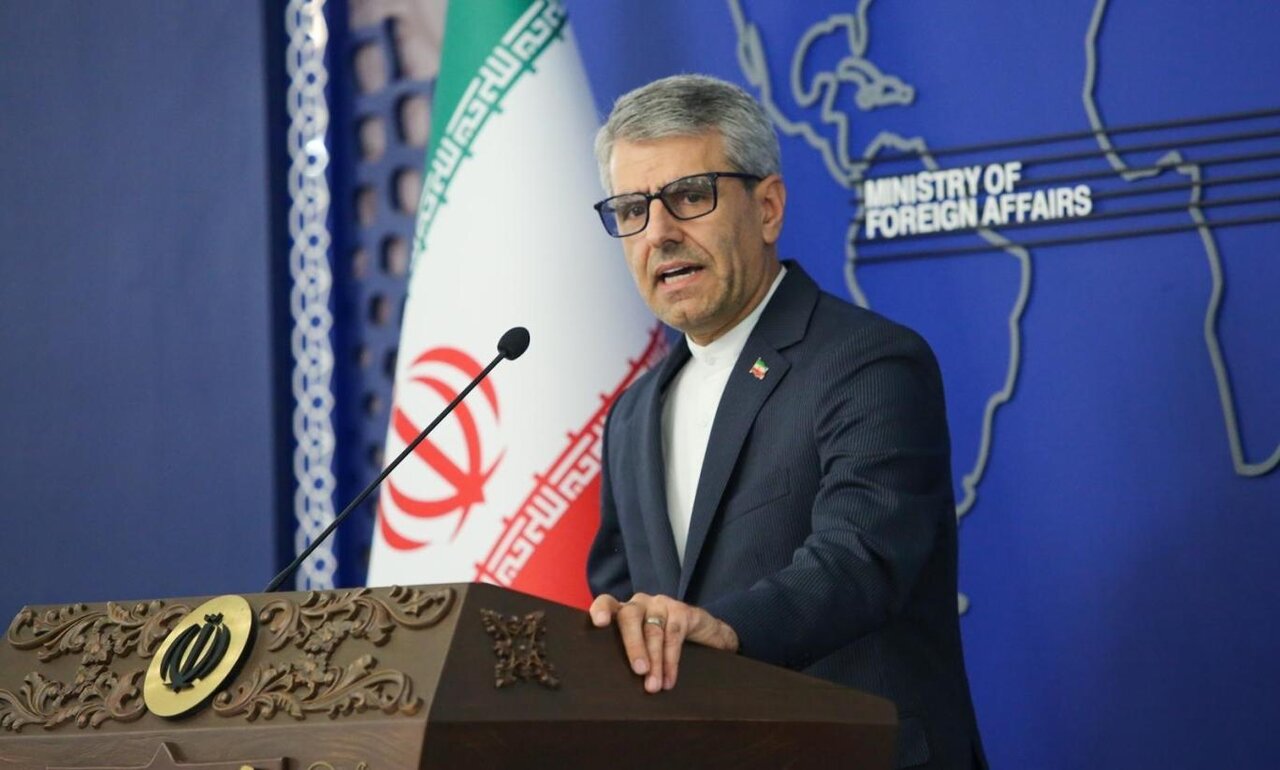
Iran's Foreign Ministry has issued an ultimatum to regional Arab states, demanding they publicly reject US claims of co-sponsoring military aggression against Iran. The demand follows comments by US CENTCOM Commander Admiral Brad Cooper, who named several Arab states as primary regional partners in the operations.
Iran is asking its Arab neighbors to say no to the US claims that they helped the US attack Iran. Iran thinks this is a big deal because it means the US is using their countries to attack Iran. Iran wants its neighbors to say they didn't help the US, so they can stop being seen as friends with the US.
Analysis
A Diplomatic Ultimatum: Iran's Demand for Arab States to Reject US Claims
Iran's Foreign Ministry has issued a stern warning to regional Arab states, demanding they publicly reject US claims of co-sponsoring military aggression against the Islamic Republic. This ultimatum comes in response to comments made by US Central Command (CENTCOM) Commander Admiral Brad Cooper, who named several Arab states as primary regional partners that aided and participated in military operations against Iran.
The demand is a clear indication of Iran's growing frustration with the US and its regional allies, who have been accused of supporting military aggression against the Islamic Republic. Iran's Foreign Ministry has emphasized that allowing foreign militaries to use regional territory, airspace, or logistical bases to stage attacks against Iran constitutes a direct act of aggression, violating basic principles of good-neighborliness and international law.
The diplomatic ultimatum has significant implications for regional stability and the ongoing conflict between Iran and the US. It raises questions about the legitimacy of US military actions in the region and the potential consequences for regional stability. The demand also highlights the complex web of alliances and rivalries in the region, with several Arab states caught in the middle of the conflict.
The Role of Regional Arab States in the Conflict
The comments made by Admiral Cooper have sparked a heated debate in the region, with several Arab states denying any involvement in military operations against Iran. However, Iran's Foreign Ministry has maintained that the named governments must clearly state their positions, warning that failure to issue an official denial will be treated as an admission of complicity.
The demand has significant implications for regional stability, as several Arab states are caught in the middle of the conflict. The US has been accused of using regional territory and airspace to launch attacks against Iran, while Iran has retaliated with drone and ballistic missile strikes against US military bases and assets operating in the region.
The Road Ahead: Implications for Regional Stability
The diplomatic ultimatum issued by Iran's Foreign Ministry has significant implications for regional stability and the ongoing conflict between Iran and the US. It raises questions about the legitimacy of US military actions in the region and the potential consequences for regional stability. The demand also highlights the complex web of alliances and rivalries in the region, with several Arab states caught in the middle of the conflict.
As the situation continues to unfold, it remains to be seen how regional Arab states will respond to Iran's demand. Will they publicly reject US claims of co-sponsoring military aggression, or will they maintain their silence and risk being seen as complicit in the conflict? Only time will tell.
Key points
- Iran's Foreign Ministry has demanded that regional Arab states publicly reject US claims of co-sponsoring military aggression against the Islamic Republic.
- The demand comes after US Central Command (CENTCOM) Commander Admiral Brad Cooper named several Arab states as primary regional partners that aided and participated in military operations against Iran.
- Iran's Foreign Ministry has emphasized that allowing foreign militaries to use regional territory, airspace, or logistical bases to stage attacks against Iran constitutes a direct act of aggression, violating basic principles of good-neighborliness and international law.
If regional Arab states publicly reject US claims of co-sponsoring military aggression, it could lead to a decrease in tensions between Iran and the US. This could also lead to a more stable region, as several Arab states are caught in the middle of the conflict.
If regional Arab states fail to publicly reject US claims of co-sponsoring military aggression, it could lead to a further escalation of the conflict between Iran and the US. This could also lead to a more unstable region, as several Arab states are caught in the middle of the conflict.