Israeli West Bank settler tells BBC attacks on Palestinians are justified as revenge
An Israeli settler in the occupied West Bank outpost of Havat Gilad told the BBC that attacks on Palestinian villages are justified as revenge, expressing extreme views on the value of Jewish lives over Palestinian lives.
Intelligence analysis by Gemini 2.5 Flash
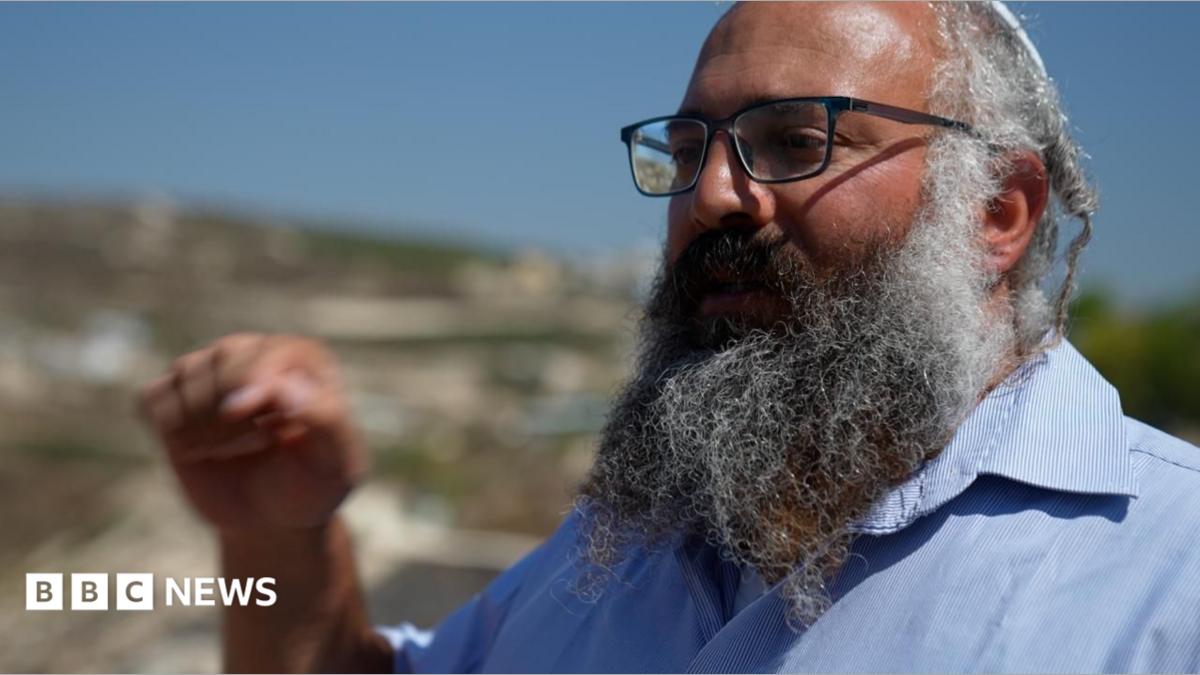
Following a wave of settler attacks after an Israeli security guard was killed, a settler lawyer openly stated that violence against Palestinians is justified retribution. He dismissed international law and UN figures, asserting a divine right to the land and accusing the global media of bias.
Imagine two groups of kids trying to share a playground. One kid from one group says, "This whole playground belongs to us because a special book says so!" And when someone from the other group gets hurt, this kid says it's okay to hurt many kids from the other group as payback, even if it's not fair. Grown-ups who watch say this isn't right, but the kid doesn't care, saying the grown-ups are just listening to the other kids' side.
Analysis
Justifying Retribution and Extreme Views
The BBC gained rare access to Havat Gilad, an Israeli settler outpost in the occupied West Bank, where a resident lawyer, Yehuda Shimon, articulated a stark justification for violence against Palestinians. Shimon explicitly stated that attacks on Palestinian villages were warranted as revenge for the killing of an Israeli security guard. His comments escalated to a chilling assertion that one Jewish life is equivalent to "millions" of Palestinian lives, a view he openly acknowledged as racist but defended by claiming divine selection of the Jewish people. These extreme sentiments, while rejected by many Israelis, are presented as crucial for understanding the escalating conflict in the region.
Shimon's rhetoric extends to a broader criticism of the Israeli government and army, which he believes do not sufficiently support Jewish claims to the land or use lethal force often enough against Palestinians. He accused the global media of propagating a Palestinian narrative and alleged that Palestinians in the area are preparing for further attacks, echoing the events of October 7, 2023. Such statements underscore a profound ideological chasm and a readiness to escalate conflict based on a perceived existential threat and a sense of divine entitlement to the land.
The Contested Landscape of West Bank Settlements
The article highlights the ongoing expansion of Israeli settlements and outposts in the West Bank, a practice deemed illegal under international law. Havat Gilad itself is an unauthorized outpost, built without Israeli planning permission or legal oversight, yet the Israeli government has previously expressed intentions to legalize it. This situation is complicated by the fact that much of the land is recognized by Israel as privately owned by Palestinians, leading to government attempts to designate alternative state land for settler construction. Shimon, however, dismisses international law as irrelevant, grounding his claims solely in biblical interpretations.
The presence of far-right religious-nationalist ministers in the current Israeli government is noted as a driving force behind the vast expansion of settlements and outposts. This political backing provides a permissive environment for the growth of these communities, further entrenching the Israeli presence in the West Bank and exacerbating tensions with Palestinian residents. The legal and political complexities surrounding these settlements are often overshadowed by the deeply held religious and nationalistic beliefs of many settlers, who view the West Bank as an integral part of their biblical homeland.
Discrepancies and Escalating Tensions
The settler's claims regarding the frequency of Palestinian attacks and the army's restraint are directly contradicted by data from the UN Office for the Co-ordination of Humanitarian Affairs (OCHA). OCHA figures show a significant disparity in casualties, with 64 Palestinians killed in the West Bank from the beginning of the year until July 20, compared to one Israeli. A substantial portion of Palestinian deaths occurred during settler attacks, and the number of injuries inflicted by settlers has sharply risen. This factual discrepancy underscores the unequal nature of the conflict and challenges the narrative presented by the settler.
The article concludes by emphasizing that the conflict between Israeli settlers and Palestinian residents is not an equal one, with Israel having occupied the West Bank. The extreme views expressed by the settler, coupled with the documented increase in settler violence and the ongoing expansion of settlements, point towards a trajectory of escalating tensions and a deepening cycle of violence in the region. The ideological justifications for such actions make reconciliation and a peaceful resolution increasingly difficult to envision. The continued expansion of settlements, often on privately owned Palestinian land, fuels resentment and provides fertile ground for further confrontations, making the prospect of a lasting peace ever more distant. The article paints a grim picture of a conflict where deeply entrenched beliefs and a disregard for international norms contribute to a volatile and dangerous environment for all inhabitants.
Key points
- An Israeli settler in Havat Gilad justified attacks on Palestinian villages as revenge for the killing of an Israeli security guard.
- The settler expressed extreme views, equating one Jewish life to 'millions' of Palestinian lives, and acknowledged the racism of his statement.
- He dismissed international law regarding settlements and criticized the Israeli government and army for not being aggressive enough against Palestinians.
- Both official Israeli settlements and unauthorized outposts like Havat Gilad are illegal under international law.
- UN OCHA data contradicts the settler's claims, showing significantly more Palestinian casualties from settler attacks and Israeli forces than Israeli casualties in the West Bank.
The explicit justification of violence and racist views by settlers, coupled with the ongoing expansion of illegal settlements and the documented increase in settler attacks, suggests a high likelihood of further escalation in the West Bank. This could lead to a deepening cycle of violence, increased casualties, and a further erosion of any prospects for a peaceful resolution, potentially destabilizing the broader Middle East.