Japan seeks record US$56 billion defence push amid growing regional tensions
Japan plans a record 8.9 trillion yen (US$56.1 billion) defense budget for the 2027 financial year, focusing on drones, AI-enabled command systems, and long-range missiles.
Intelligence analysis by Gemini 2.5 Flash
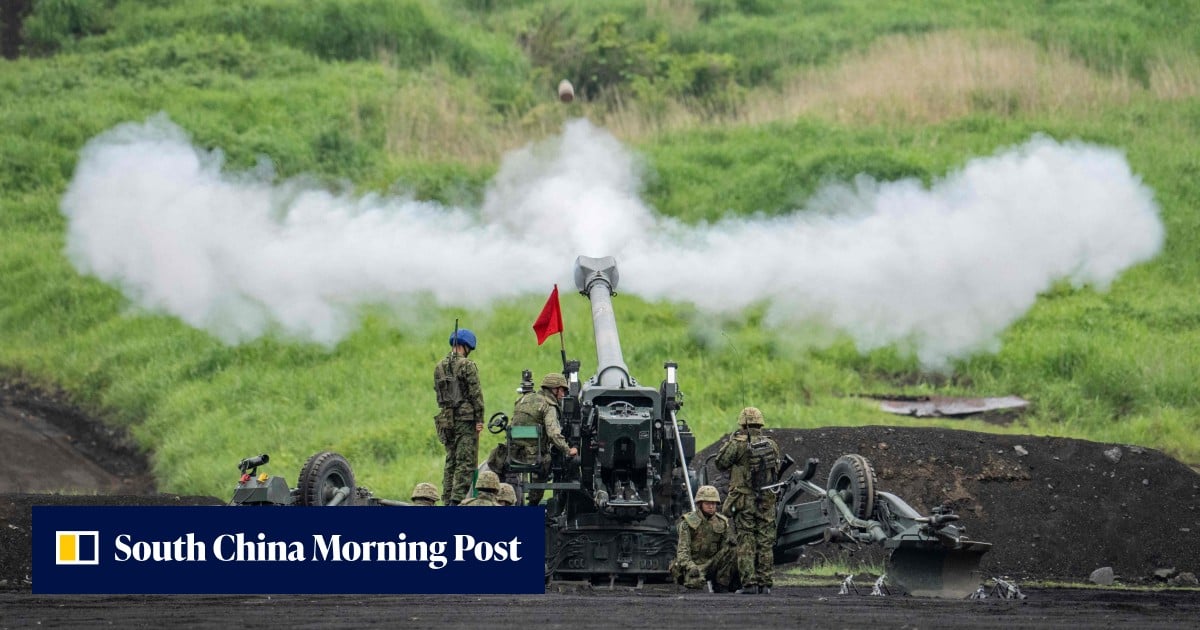
Driven by a deteriorating security situation in the Indo-Pacific, lessons from the Ukraine conflict, and concerns over the reliability of the US security umbrella, Japan is significantly increasing its defense spending to bolster its self-defense capabilities and modernize its military technology.
Imagine Japan is building a stronger shield and better tools to protect itself, like getting new, faster robots and smarter computers for its defense. They want to spend a lot more money, about 56 billion US dollars, because they see more dangers around them and want to be sure they can keep themselves safe, even if their big friend, the US, isn't always right there.
Analysis
Japan's proposed record defense budget of 8.9 trillion yen (US$56.1 billion) for the 2027 financial year marks a significant pivot in its post-war security posture. This substantial increase is not merely an incremental adjustment but a strategic response to a complex and rapidly evolving geopolitical landscape. The allocation of funds towards advanced military technologies such as drones, AI-enabled command systems, and long-range missiles underscores a commitment to modernizing its self-defense forces and enhancing deterrence capabilities. This move is further contextualized by the ongoing review of three critical national security documents, which are expected to solidify Japan's more assertive defense stance and potentially pave the way for even greater future spending. The emphasis on supporting the domestic defense industry also signals a desire for greater self-reliance in military procurement and technological innovation, reducing dependence on foreign suppliers and fostering a robust indigenous defense ecosystem.
8.9 Trillion Yen
The proposed budget of 8.9 trillion yen represents an unprecedented financial commitment by Japan to its defense capabilities. This figure is a direct reflection of Tokyo's assessment of heightened regional threats and the imperative to adapt to contemporary military challenges. The funds are earmarked for a range of strategic acquisitions and developments, including cutting-edge unmanned aerial vehicles and sophisticated command and control systems powered by artificial intelligence. These investments are designed to provide Japan with advanced reconnaissance, strike, and defensive capabilities, moving beyond traditional defensive postures to embrace more proactive security measures.
Furthermore, a significant portion of this budget is dedicated to the acquisition and development of long-range missiles. This focus indicates a strategic shift towards enhancing Japan's counter-strike capabilities, a concept that has been a subject of considerable debate within the country's pacifist constitution. The emphasis on domestic defense industry support is also crucial, aiming to bolster Japan's industrial base and ensure a steady supply of advanced military hardware, thereby strengthening its long-term security autonomy.
Indo-Pacific Region
The deteriorating security situation in the Indo-Pacific region is a primary catalyst for Japan's accelerated defense build-up. The article highlights a convergence of regional threats that necessitate a robust response from Tokyo. This includes growing assertiveness from certain regional powers, unresolved territorial disputes, and the broader strategic competition playing out across the Asia-Pacific. The lessons drawn from the ongoing conflict in Ukraine have also profoundly influenced Japan's strategic thinking, underscoring the importance of strong deterrence and self-sufficiency in national defense.
Moreover, there is a stated concern regarding the reliability of the US security umbrella, a cornerstone of Japan's post-war defense strategy. This perceived uncertainty, coupled with Washington's encouragement for allies to increase their defense spending, has prompted Japan to take greater ownership of its own security. The region's dynamic geopolitical environment, characterized by rapid military modernization by various actors, compels Japan to ensure its defense capabilities remain relevant and effective in safeguarding its national interests and contributing to regional stability.
William Yang
According to William Yang, a Taiwan-based analyst for the International Crisis Group, the US has been actively encouraging its allies, both in NATO and the Asia-Pacific, to substantially increase their defense expenditures. This external pressure from a key ally, combined with Japan's internal assessment of its security needs, provides a dual impetus for the proposed budget hike. Yang's observation underscores a broader trend of burden-sharing within alliances, where the US expects its partners to contribute more significantly to collective security.
This perspective suggests that Japan's defense push is not solely an isolated national decision but also a response to evolving alliance dynamics and a recalibration of responsibilities. The analyst's insights reinforce the idea that Japan's actions are part of a larger regional and global shift towards enhanced defense readiness, driven by a complex interplay of internal security concerns and external strategic imperatives. The emphasis on self-reliance, while maintaining alliances, reflects a pragmatic approach to navigating an increasingly unpredictable international environment.
Key points
- Japan plans a record 8.9 trillion yen (US$56.1 billion) defense budget for the 2027 financial year.
- Major outlays are planned for drones, AI-enabled command systems, and long-range missiles.
- The spending increase is driven by a deteriorating security situation in the Indo-Pacific and concerns over US security reliability.
- Japan is reviewing three key national security documents, with updated papers due by year-end, potentially leading to further spending increases.
- The US has been actively pushing allies in the Asia-Pacific to significantly increase their defense spending.
Japan's increased defense spending could lead to enhanced regional stability by creating a stronger deterrent against potential aggressors, thereby reducing the likelihood of conflict. A more self-reliant Japan could also contribute more effectively to multilateral security efforts, fostering greater collective security in the Indo-Pacific.
This significant defense push by Japan risks escalating an arms race in the Indo-Pacific, potentially leading to increased regional tensions and instability. The focus on long-range missiles could be perceived as provocative by neighboring countries, raising the chances of miscalculation or conflict.