Less than human': how unhoused people in Atlanta are being treated during the World Cup – video
Employees in Atlanta, Georgia, recently threw away tents, medication, identification, and other belongings of unhoused people at a public park without warning, sparking concerns over the treatment of the city's several thousand unhoused people during the World Cup.
Intelligence analysis by Llama
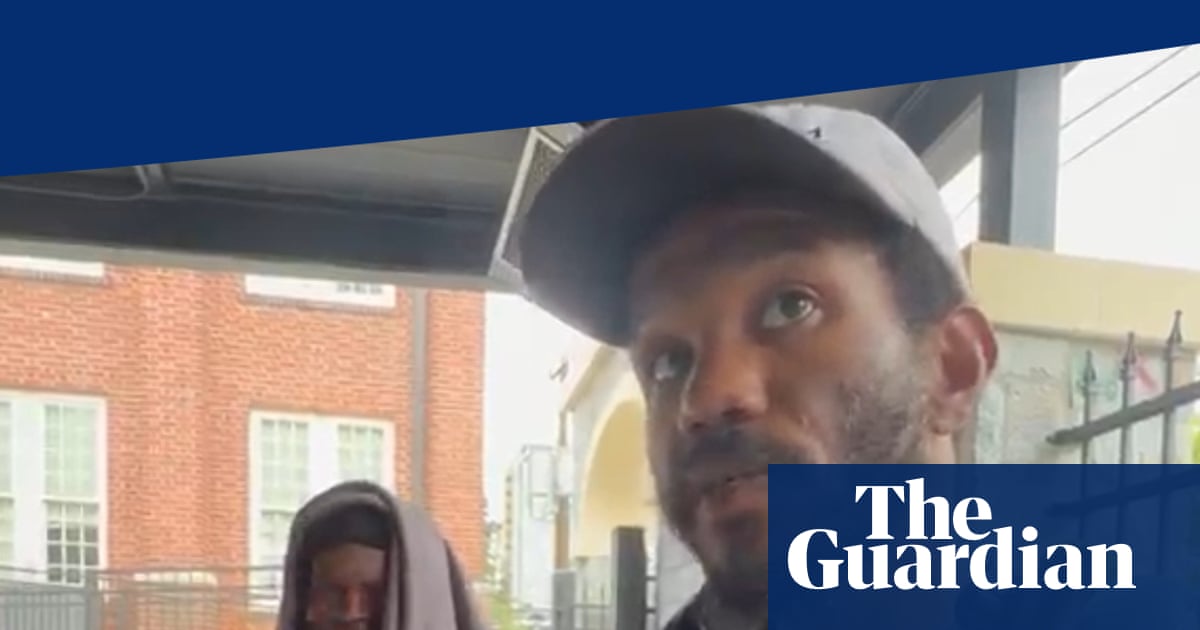
The incident has drawn attention to ongoing tension over the treatment of Atlanta's unhoused population during the World Cup, with activists and officials pointing to an apparent violation of procedures created after a city employee ran over a tent with a front loader last year, killing a man.
Imagine you're a kid who has nowhere to go and no food to eat. You go to a park where other people like you are living in tents. But then, the people in charge come and throw away all your stuff, including your medicine and identification. This is what's happening to people in Atlanta who are homeless during the World Cup. It's not fair and it's not right. The city needs to help these people and make sure they have a safe place to live.
Analysis
A City in Crisis: The Unhoused Population of Atlanta
The recent incident in which employees in Atlanta, Georgia, threw away tents, medication, identification, and other belongings of unhoused people at a public park without warning has sparked widespread concern over the treatment of the city's several thousand unhoused people during the World Cup. This is not an isolated incident, but rather a symptom of a larger problem that has been brewing for years. The city's unhoused population has been growing steadily, with many residents struggling to access basic necessities like food, shelter, and healthcare. The World Cup has brought a surge of tourists and revenue to the city, but it has also highlighted the stark contrast between the city's affluent neighborhoods and its struggling communities. The treatment of the unhoused population during the World Cup is a stark reminder of the city's failure to address the root causes of homelessness and to provide adequate support to those in need. The city's officials have been quick to downplay the incident, but the facts speak for themselves. The park where the incident occurred was not an encampment, but rather a gathering place for people who had nowhere else to go. The city's response has been to sweep the area clean, without warning or regard for the people who call it home. This is not just a matter of public health and safety, but also a human rights issue. The city's failure to provide adequate support to its unhoused population is a clear violation of its obligations under international human rights law. The World Cup has brought a spotlight to the city's treatment of its unhoused population, but it has also highlighted the need for a more comprehensive and compassionate approach to addressing homelessness. The city must take immediate action to address the root causes of homelessness and to provide adequate support to those in need. This includes increasing funding for affordable housing, expanding access to healthcare and social services, and implementing policies that prioritize the needs of the unhoused population. The city's officials must also take responsibility for their actions and acknowledge the harm that has been caused. Only through a commitment to addressing the root causes of homelessness and providing adequate support to those in need can the city truly begin to address the crisis that is unfolding before our eyes.
The Human Cost of Homelessness
The treatment of the unhoused population during the World Cup is not just a matter of public health and safety, but also a human rights issue. The city's failure to provide adequate support to its unhoused population is a clear violation of its obligations under international human rights law. The World Cup has brought a spotlight to the city's treatment of its unhoused population, but it has also highlighted the need for a more comprehensive and compassionate approach to addressing homelessness. The city must take immediate action to address the root causes of homelessness and to provide adequate support to those in need. This includes increasing funding for affordable housing, expanding access to healthcare and social services, and implementing policies that prioritize the needs of the unhoused population. The city's officials must also take responsibility for their actions and acknowledge the harm that has been caused. Only through a commitment to addressing the root causes of homelessness and providing adequate support to those in need can the city truly begin to address the crisis that is unfolding before our eyes.
A Call to Action
The treatment of the unhoused population during the World Cup is a stark reminder of the city's failure to address the root causes of homelessness and to provide adequate support to those in need. The city must take immediate action to address the root causes of homelessness and to provide adequate support to those in need. This includes increasing funding for affordable housing, expanding access to healthcare and social services, and implementing policies that prioritize the needs of the unhoused population. The city's officials must also take responsibility for their actions and acknowledge the harm that has been caused. Only through a commitment to addressing the root causes of homelessness and providing adequate support to those in need can the city truly begin to address the crisis that is unfolding before our eyes.
Key points
- Employees in Atlanta, Georgia, threw away tents, medication, identification, and other belongings of unhoused people at a public park without warning.
- The incident has sparked concerns over the treatment of the city's several thousand unhoused people during the World Cup.
- The city's officials have been quick to downplay the incident, but the facts speak for themselves.
- The city's failure to provide adequate support to its unhoused population is a clear violation of its obligations under international human rights law.
If the city takes immediate action to address the root causes of homelessness and provides adequate support to those in need, it's possible that the treatment of the unhoused population during the World Cup could be a turning point in the city's approach to homelessness. With increased funding for affordable housing, expanded access to healthcare and social services, and policies that prioritize the needs of the unhoused population, the city could begin to address the crisis that is unfolding before our eyes.
If the city continues to prioritize economic development over social welfare, the treatment of the unhoused population during the World Cup could be just the tip of the iceberg. The city's failure to address the root causes of homelessness and provide adequate support to those in need could lead to further human rights abuses and a worsening of the crisis.