Middle East: Netanyahu: We have not agreed to the plan for Hamas disarmament
Israeli Prime Minister Benjamin Netanyahu publicly denied that Israel agreed to a US-backed Peace Council plan for Hamas disarmament in Gaza, stating Israel only received a draft and sent comments.
Intelligence analysis by Gemini 2.5 Flash
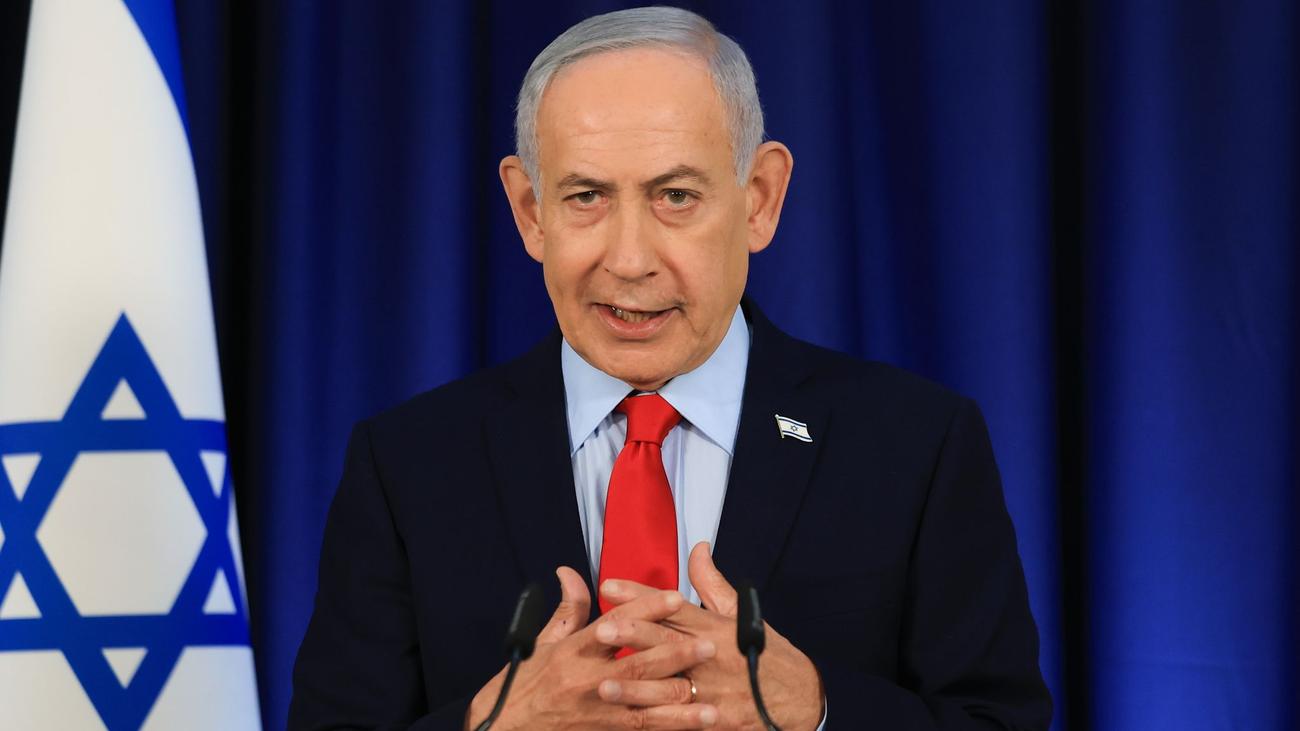
Netanyahu clarified that Israel has not consented to the Peace Council's proposal, initiated by Donald Trump, which outlines Hamas disarming and Israeli forces withdrawing from Gaza. He emphasized that Israel's army would not retreat from its current positions until Hamas is completely disarmed, casting significant doubt on the plan's immediate implementation.
Imagine two groups fighting over toys. A grown-up suggests a plan where one group gives up their toy weapons and the other group goes home. But one of the leaders, Mr. Netanyahu, says, "Hold on, we didn't fully agree to that plan! We just saw a draft, and we won't leave until the other group really gives up all their toy weapons." So, the plan to stop the fighting and make everyone happy is now very tricky and might not happen.
Analysis
Netanyahu's Public Rejection
Israeli Prime Minister Benjamin Netanyahu has publicly distanced his government from a recently announced plan by the Peace Council, an initiative founded by former US President Donald Trump, aimed at disarming Hamas in the Gaza Strip. Netanyahu stated in a video message that Israel had only received a "draft" of the plan and had not agreed to it, instead sending back its own comments. This statement directly contradicts Trump's earlier announcement that the Peace Council had reached an agreement for the "complete disarmament" of Hamas, an assertion that had already been met with skepticism.
This public denial by Netanyahu underscores the deep divisions and complexities surrounding any potential peace initiatives in the region. The Israeli government's immediate rejection of the plan's terms, despite a prior announcement of an agreement, highlights the significant hurdles faced by international mediators attempting to broker a lasting resolution. The discrepancy between Trump's announcement and Netanyahu's clarification suggests either a miscommunication, a premature declaration, or a fundamental disagreement on the proposed framework.
Core Disagreements and Israeli Stance
The primary points of contention revolve around the precise sequence of Hamas's disarmament and the conditions and timeline for the Israeli army's withdrawal from the Gaza Strip. Netanyahu firmly reiterated Israel's position, stating that its forces would not retreat from their "current line" until Hamas is fully disarmed. This stance is particularly significant given that the Israeli army has expanded its control over Palestinian territory in Gaza from 53 percent to over 60 percent in recent months. The "Times of Israel" speculated that Netanyahu's remarks imply Israel's unwillingness to even revert to the ceasefire lines previously agreed upon, a step reportedly included in the Peace Council's plan.
Conversely, Hamas has conditioned the surrender of its heavy weapons on the withdrawal of the Israeli army from Gaza, creating a clear deadlock. This reciprocal dependency means that without a mutually acceptable framework for both disarmament and withdrawal, the plan's implementation remains highly uncertain. Netanyahu's insistence on maintaining Israel's current military posture until complete disarmament reflects a deep-seated security concern, while Hamas's demands highlight its leverage and conditions for any concessions.
Implications for Peace Efforts
Netanyahu's rejection casts a long shadow over the viability of the Peace Council's initiative and broader efforts to de-escalate the conflict. Despite the plan's provision for a cessation of all hostilities, Israel has continued to conduct operations against alleged members of terrorist organizations in the coastal area, even during a ceasefire. Netanyahu affirmed that Israeli soldiers remain instructed to protect themselves and Israeli citizens, indicating a continued proactive security posture.
Following Israel's initial reservations, a meeting took place between Nikolaj Mladenow, High Representative of the Peace Council, and US advisor Aryeh Lightstone with Netanyahu. While a statement after the meeting claimed Israel and the Peace Council had "a common understanding about the desired goals," Netanyahu's subsequent public denial suggests that this understanding did not translate into an agreement on the specific plan. This divergence between private diplomatic assurances and public statements further complicates the path forward, making any immediate breakthrough in disarmament and withdrawal highly improbable and prolonging the uncertainty in the region.
Key points
- Netanyahu publicly denied Israel agreed to the Peace Council's Hamas disarmament plan for Gaza.
- He stated Israel only received a "draft" and sent comments, not an agreement, contradicting Trump's earlier announcement.
- The plan, initiated by Donald Trump, involves Hamas disarming and Israeli forces withdrawing from Gaza.
- Israel insists its army will not retreat until Hamas is fully disarmed, while Hamas links its disarmament to Israel's withdrawal.
- The viability of the Peace Council's plan remains highly uncertain due to these fundamental disagreements.
If diplomatic efforts continue, and the "common understanding" mentioned after the meeting can be built upon, a revised plan might emerge that addresses Israel's security concerns while still achieving Hamas disarmament and a path to de-escalation.
Netanyahu's public rejection and Israel's insistence on maintaining its "current line" could lead to a complete breakdown of the Peace Council's initiative, prolonging the conflict and further destabilizing the region, potentially increasing humanitarian suffering.
Market signals
- OIL Increased geopolitical uncertainty in the Middle East due to stalled peace efforts could raise concerns about oil supply disruptions.
- XAU Heightened regional instability typically drives investors towards safe-haven assets like gold.
AI-generated analysis of potential market relevance. Not financial advice.