Minister tells social media firms to remove posts that 'celebrate' dangerous driving after A66 crash
UK government backs Ofcom taking 'tough action' against social media platforms that fail to remove videos celebrating dangerous driving, after a crash killed seven on the A66.
Intelligence analysis by Llama
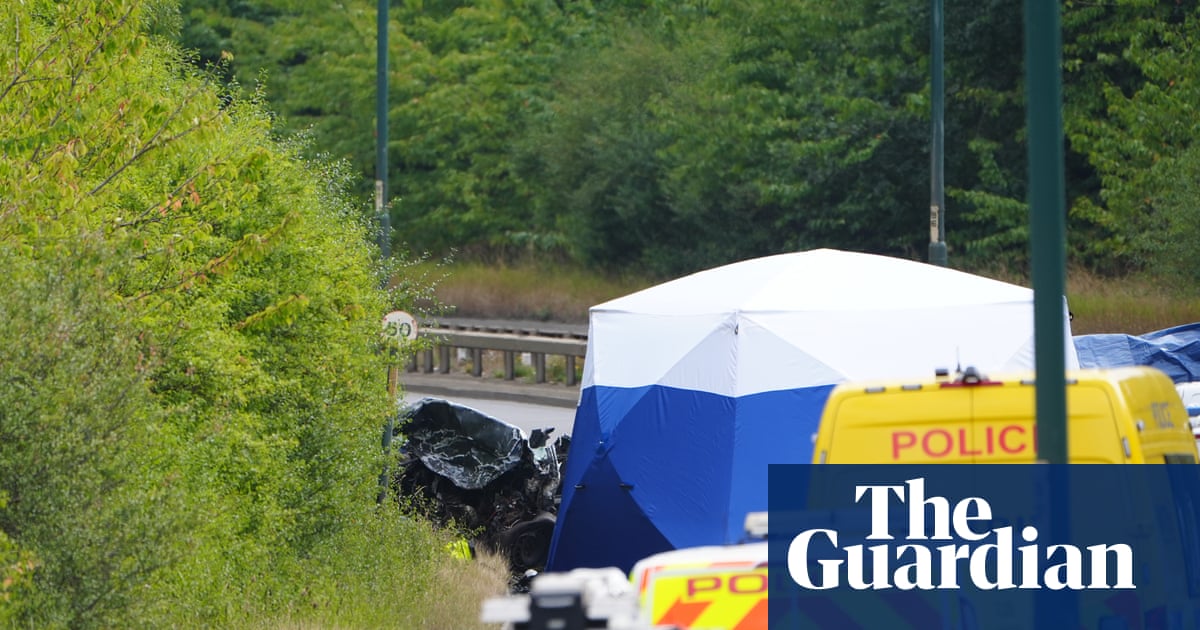
Downing Street backs Ofcom to take 'tough action' against social media platforms that fail to remove videos glorifying dangerous driving, after a crash on the A66 killed seven people including two police officers. The government says platforms have legal duties under the Online Safety Act to remove such content.
Seven people died in a car crash where a car went the wrong way down a big road. Some people film themselves driving dangerously to get likes online, and the government is angry. It is telling apps like TikTok to remove those videos, or the regulator will punish them — like a principal telling kids to stop showing off.
Analysis
The A66 collision
The fatal incident unfolded in the early hours of Saturday on the A66 near South Bank, Middlesbrough, when a Volkswagen Passat carrying five people — aged between 17 and 23 — collided head-on with a marked armed response vehicle while driving the wrong way along the road. Two police officers, PC Matthew Blades and PC Tom Clough, were pronounced dead at the scene alongside the five passengers in the Passat: Cole Robert Worthy, Theo Rae, Makai Saddington, Michael Robert Cahill, and Jacob Matusiak. Police had pursued the car for seven minutes after receiving intelligence of "multiple incidents" involving a vehicle matching its description, but aborted the chase when it began driving against the flow of traffic. The car, believed to have carried cloned plates, struck the police vehicle approximately 10 seconds after officers pulled back to the correct side of the carriageway.
The crash came just under a week after a similar tragedy in Ireland, where five teenagers died in a collision involving a car driving the wrong way on the M9 in County Kildare. Together, the two incidents have intensified political pressure on social media platforms, where videos of intentionally dangerous driving — often filmed by the occupants and posted for clout — have proliferated.
TikTok's age-checking investigation
Ofcom confirmed it had already opened an investigation into TikTok in July over concerns about the effectiveness of its age-checking software, and that the regulator's powers under the Online Safety Act require platforms to "minimise children's exposure to violent material and content promoting dangerous challenges." A spokesperson for Ofcom told the Guardian that the regulator had "shown we'll take action if evidence suggests companies are falling short." TikTok has denied that its content puts children at risk, claiming it prohibits content that could cause significant physical harm and removes videos and accounts that break its rules.
The scrutiny places TikTok at the centre of a regulatory fight that could shape how the platform operates in the UK. The defence minister Luke Pollard was pointed, noting that platforms had "argued against some of the regulations, saying they can police themselves" and calling on them to demonstrate that capacity by removing dangerous-driving content voluntarily.
The Online Safety Act powers
Downing Street made clear that the government would use the full weight of the Online Safety Act if platforms did not act unilaterally. A No 10 spokesperson said Ofcom would have the government's "full backing to take tough action" and stressed that the culture secretary was "clear that it should be removed in line with their legal obligations." The framing positions enforcement against TikTok and other platforms not as a discretionary policy choice but as the execution of existing statutory duties.
For the platforms themselves, the financial stakes are meaningful. Pollard highlighted what he described as "financial incentives" embedded in the algorithms that reward engagement with extreme content, suggesting the business model itself is part of the problem. If Ofcom proceeds with enforcement under the Online Safety Act, the resulting fines, compliance costs, and potential operational restrictions could materially affect the UK revenue of TikTok, Meta, and other major platforms that host user-generated video content. The case may also set a precedent for how the Act is used against algorithmic amplification of harmful trends more broadly.
Key points
- Seven people, including two police officers, died on the A66 near Middlesbrough when a Volkswagen Passat drove the wrong way and collided with a marked armed response vehicle.
- Downing Street has given Ofcom its 'full backing to take tough action' against social media platforms that fail to remove videos glorifying dangerous driving.
- Ofcom opened an investigation into TikTok in July over concerns about its age-checking software and child safety compliance.
- Defence minister Luke Pollard said platforms had 'financial incentives' embedded in their algorithms to share extreme content and urged them to self-regulate.
- The government has threatened to use powers under the Online Safety Act to compel platforms to take down the content if they do not act voluntarily.
If social media platforms respond promptly and proactively remove dangerous driving content, they could demonstrate that self-regulation works under the Online Safety Act, potentially avoiding heavier statutory penalties. The coordinated pressure from Downing Street, Ofcom, and the defence ministry may also discourage copycat behaviour, reducing the prevalence of filmed dangerous stunts on UK roads.
If platforms fail to remove content voluntarily, enforcement under the Online Safety Act could trigger lengthy legal battles and create uncertainty for the UK operations of TikTok, Meta, and other major social media firms. The underlying algorithmic incentives that reward extreme content may also persist, meaning the trend of filmed dangerous driving could continue regardless of regulatory action.