Music Festival: Stelzen Festival with Cow Conversations and a Manure Organ
The Stelzen Festival will let visitors talk to a cow named Käthe and hear a manure organ at its 33rd edition in late June.
Intelligence analysis by GPT-5.4 Mini
The cult festival in the border area of Bavaria, Saxony, and Thuringia is mixing rural life, AI, and experimental music again. Its program includes a cow-linked installation, a revived land-machine symphony, and a week of nonstop Bach afterward.
A tiny village festival is turning a cow into a talk show guest and using odd instruments like a manure organ. It is a bit like a farm, a concert hall, and a science fair all rolled into one.
Analysis
A village festival with unusual ideas
The "Stelzenfestspiele bei Reuth" are trying something new in the relationship between humans and animals. For the festival's 33rd edition, visitors at the end of June will be able to talk to a cow named Käthe. She lives in a barn in nearby Rothenacker and is linked to the festival through a real-time installation, according to festival director Henry Schneider.
Käthe can be seen and heard by visitors. She wears a cap with measuring points so her brain waves can be recorded. Before the installation was set up, an AI system was trained with general information about cows and specific information about Käthe. The goal is for the cow to answer questions about herself, including when she was born, how many calves she has had, and where she comes from.
Back to the festival's roots
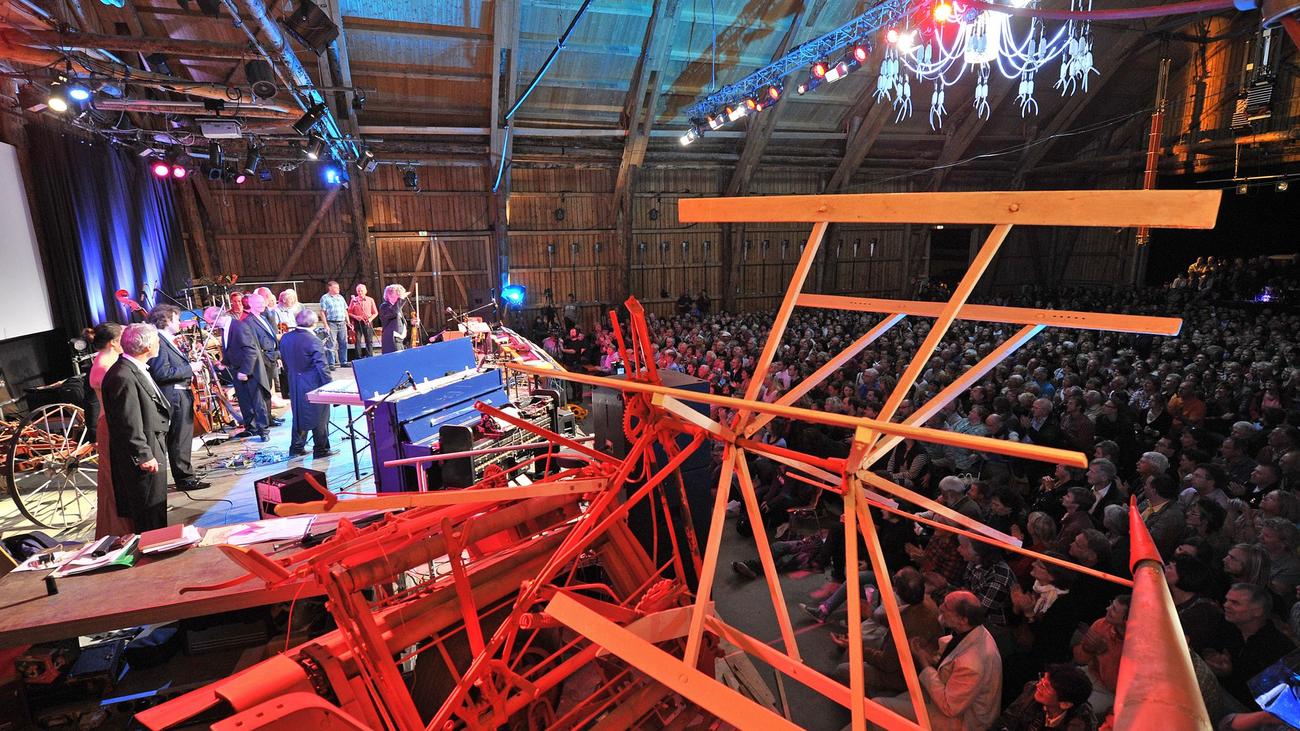
The festival is also bringing back one of its signature pieces after a two-year break: the "Landmaschinensinfonie". Schneider said he gave in to audience pressure and now wants to perform what may be the biggest "Bolero" ever. Alongside a manure organ, which is blown with slurry hoses, the piece will also feature a sounding milking machine and singing.
The festival has cult status and is known beyond the region. Schneider, a former violinist with the Leipzig Gewandhaus Orchestra, founded it in 1993 in his home village. The name nods to Bayreuth, with the local concert barn serving as a kind of festival hall. Music is also performed in Stelzen itself, on a hill with its own festival orchestra.
A small village, a big crowd
Stelzen is in Thuringia, while the village of Reuth, just two kilometers away, is in Saxony. Bavaria is not far either. During the festival, the village of about 200 residents regularly fills with thousands of guests. Visitors can camp on the Stelzenberg, and music spreads through woods, fields, other barns, and the village church.
This year's festival runs from June 26 to 28 and includes the Arcis Saxophone Quartet from Munich, the Thuringian rock band The Blackbirds, the ensemble Tamala with musicians from Senegal and Belgium, and the Neue Bachische Collegium Musicum Leipzig under Reinhard Goebel. Schneider himself will also perform, as a land-machine musician and with his nail violin.
After the Sunday finale, the music does not stop. As every year, Bach will play around the clock for another week on the Bach meadow, with speakers hidden in a tree and the volume lowered at night so villagers can sleep.
Key points
- Visitors will be able to interact with a cow named Käthe through a real-time installation tied to brain-wave measurements and AI.
- The festival is reviving its "Landmaschinensinfonie" after a two-year pause, featuring a manure organ and a milking machine.
- The Stelzen festival was founded in 1993 by former Gewandhaus violinist Henry Schneider and has become a cult event.
- This year's edition runs from June 26 to 28 and will bring several thousand visitors to a village of about 200 people.
- Bach music will continue for a week after the festival ends, played around the clock with reduced volume at night.
If the concept works, the festival could deepen its cult status by giving visitors something they cannot get anywhere else. It may also keep local traditions alive by mixing them with new forms of performance and technology.
The unusual installations could feel gimmicky if the AI cow attraction or the land-machine performance does not connect with audiences. The festival's popularity may also continue to strain the small village as thousands of visitors arrive at once.