Natl. authority 'deterrent factor against excessive demands'
Iran's Foreign Ministry spokesman, Esmaeil Baghaei, stated that national power and authority are the only effective deterrent against foreign aggression, drawing lessons from the 1941 Allied invasion of Iran.
Intelligence analysis by Gemini 2.5 Flash

On the 85th anniversary of the Allied invasion of Iran in 1941, Foreign Ministry spokesman Esmaeil Baghaei reflected on the historical humiliation and damage inflicted. He asserted that Iran's national dignity and independence now require self-confidence and a strong will to resist, emphasizing national authority as the sole defense against external demands.
Imagine a kid who got picked on a long time ago because they weren't strong enough. Now, that kid's grown up and says, "I've learned my lesson! The only way to stop bullies from asking for too much is to be really strong myself." That's what Iran's spokesman is saying, remembering a time when other countries came into their home, and now they believe being powerful is the best way to stay safe and respected.
Analysis
The statement by Iran's Foreign Ministry spokesman, Esmaeil Baghaei, on the 85th anniversary of the 1941 Allied invasion, serves as a powerful reminder of historical trauma shaping contemporary Iranian foreign policy. The invasion, which saw Soviet and British forces occupy Iran despite its declared neutrality, led to the abdication of Reza Shah Pahlavi and a six-year occupation, leaving a deep scar on the national psyche regarding sovereignty and dignity. This historical context is crucial for understanding Iran's persistent emphasis on national strength and self-sufficiency as a bulwark against foreign intervention.
Shahrivar 3
Shahrivar 3, corresponding to August 25, marks a pivotal date in Iranian history, symbolizing a period of profound national humiliation and vulnerability. The spokesman highlighted that the invasion, occurring during World War II, resulted not only in physical destruction and loss of life but also a significant insult to the nation's dignity. This memory fuels a strong nationalistic sentiment that views any external pressure or 'excessive demands' through the lens of past subjugation. The narrative reinforces the idea that Iran must never again be caught unprepared or weak in the face of global power dynamics, making national authority a non-negotiable principle.
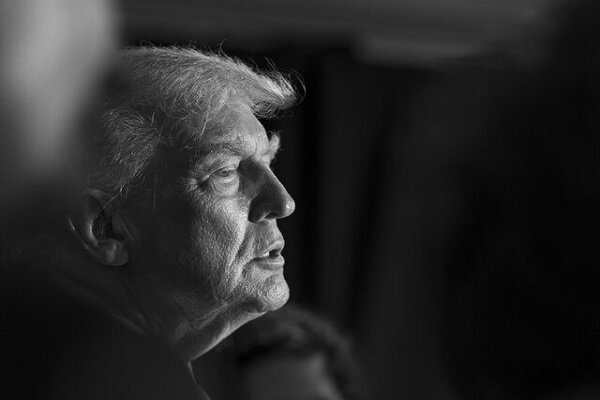
Mohammad Reza Pahlavi
The article explicitly references the 'deposed Shah of Iran [Mohammad Reza Pahlavi]' and his later characterization of Iran's neutrality as an 'illusion of a “golden cage”'. This detail is significant as it implicitly critiques the Pahlavi era's approach to foreign policy, suggesting that a reliance on external powers or a perceived lack of genuine national strength led to vulnerability. By contrasting the past with the present 'powerful Iran,' the spokesman subtly positions the current government's emphasis on 'self-confidence and a strong will to resist' as a more effective and honorable path to protecting national dignity and independence, learning from the perceived failures of previous regimes.
Esmaeil Baghaei
Esmaeil Baghaei, as Iran's Foreign Ministry spokesman, articulates a core tenet of the Islamic Republic's strategic thinking. His remarks are not merely a historical reflection but a contemporary policy statement, asserting that 'national authority with all its components is the only effective deterrent against foreign excessive demands and aggression.' This declaration signals to both domestic and international audiences that Iran's current posture of resistance and self-reliance is a direct consequence of historical lessons. It implies that any diplomatic engagement or negotiation must acknowledge Iran's inherent strength and respect its sovereignty, rejecting any terms perceived as compromising its national dignity or independence.
Key points
- Iran's Foreign Ministry spokesman emphasized national power as the sole deterrent against foreign aggression.
- The statement was made on the 85th anniversary of the 1941 Allied invasion and occupation of Iran.
- The 1941 invasion is remembered as a bitter experience involving the disintegration of the imperial army and the Shah's abdication.
- Lessons learned from history underscore the need for self-confidence and a strong will to resist to protect national dignity and independence.
- The spokesman highlighted the insult to national dignity and the plundering of Iranian property during past foreign interventions.
The emphasis on national authority and self-confidence could foster greater internal unity and resilience, potentially enabling Iran to navigate complex international challenges with a stronger, more independent stance. This approach might lead to more favorable outcomes in negotiations by projecting an image of unwavering resolve.
This strong rhetoric, while rooted in historical experience, could be interpreted by external actors as an unwillingness to compromise, potentially leading to increased diplomatic stalemates or heightened tensions. A rigid stance against 'excessive demands' might limit avenues for de-escalation or mutually beneficial agreements, risking further isolation.