Trump changed his weapon; will the outcome change too?
The US has launched a new "economic D-Day" against Iran, intensifying financial sanctions, but the article questions its effectiveness given Iran's long history of adapting to such pressures.
Intelligence analysis by Gemini 2.5 Flash
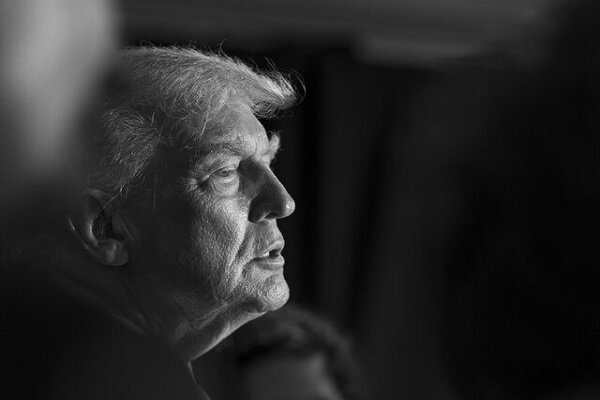
Washington, under the leadership of Scott Bessent, has unveiled what it calls the "largest financial assault in history" against Iran, framing it as an "economic D-Day." However, the analysis suggests this is merely a re-packaging of the long-standing "maximum pressure" strategy, which has consistently failed to force Iran into political concessions, as Iran has developed alternative …
Imagine two kids playing a game. One kid, America, keeps trying to make the other kid, Iran, do something by taking away their toys or treats. America has tried this many times before, and Iran has always found new ways to play or get treats from other friends. Now, America is trying the same trick again, but calling it a really big, important move. The article says it's like America changed its toy-taking strategy, but Iran has already learned how to get around it, so it might not work any better this time.
Analysis
The latest US economic offensive against Iran, dubbed an "economic D-Day," represents a continuity rather than a radical departure from previous strategies. Washington's approach, characterized by cutting off dollar access, targeting cooperating banks, and pressuring economic partners like China, mirrors the "maximum pressure" campaign of a decade ago. The article posits that the change lies more in rhetoric and propaganda intensity than in fundamental strategy, questioning the efficacy of repeating a tactic that has historically failed to achieve its desired political outcomes against Iran. This persistent reliance on economic tools, despite their limited success in altering Iran's political stance, underscores a perceived disconnect in Washington's understanding of Iran's motivations, which extend beyond mere economic calculations to encompass national security and political independence.
Scott Bessent
US Treasury Secretary Scott Bessent is highlighted as the figure unveiling this latest "largest financial assault in history" against Iran. The article implicitly critiques the US administration's decision to frame this economic pressure with such grandiose, warlike terminology, suggesting it masks a lack of novel strategic thinking. By presenting these actions as an "economic D-Day," Washington attempts to project an image of strength and decisive action. However, the analysis argues that this choice of title inadvertently raises questions about why the US is resorting to economic tools, which have been repeatedly tested and found wanting, to achieve goals that military pressure also failed to secure. This move suggests a shift in the means of pressure, but not necessarily a re-evaluation of the ends or the underlying assumptions about Iran's resilience.
China
The role of China emerges as a critical factor in the effectiveness of US sanctions. The article points out the inherent contradiction in Washington's strategy: attempting to mobilize the global financial system against Iran while simultaneously threatening major economic partners like China. China, described as one of the world's largest economies and a crucial trading partner for Iran, is presented with a choice between cooperation with Tehran or access to the US financial system. The analysis argues that pressuring China in this manner risks transferring part of the economic burden to US trade and financial networks, thereby incentivizing other countries to develop financial mechanisms independent of the dollar. This dynamic is particularly significant in a post-war regional context where countries are increasingly wary of complete reliance on a single foreign power, potentially accelerating a global shift towards de-dollarization and diversified economic partnerships.
D-Day
The US's choice to label its new economic offensive as an "economic D-Day" is critically examined, with the article suggesting it is more a sign of changing tools after previous failures than a genuinely new strategy. The historical connotation of D-Day implies a decisive, game-changing military operation, yet applying it to economic sanctions against a nation that has long adapted to such pressures is portrayed as a miscalculation. The article argues that sanctions can only be effective if the target has not yet found alternative routes, a condition Iran has long overcome through years of developing indirect trade and financial networks. This rhetorical framing, therefore, serves more as a propaganda tool than an accurate reflection of the strategy's potential for success, especially given Iran's deep-seated commitment to national security and political independence, which transcends purely economic considerations.
Key points
- The US has launched a new "economic D-Day" against Iran, intensifying financial sanctions, but the article views it as a re-packaging of past "maximum pressure" policies.
- The strategy involves cutting off dollar access, targeting banks, and pressuring countries like China to choose between Iran and the US financial system.
- Iran has years of experience under sanctions and has developed alternative trade and financial networks, making it resilient to new pressures.
- The article argues that US sanctions fail because Iran's calculations prioritize national security and political independence over economic pain.
- Pressuring major partners like China could inadvertently push more countries towards creating financial channels independent of the US dollar.
Iran's continued development of alternative economic routes and strengthening of non-Western partnerships could lead to greater economic independence and resilience against future external pressures, fostering a more diversified global economic landscape.
Despite Iran's resilience, the sustained economic pressure could still inflict significant costs on its economy and population, potentially exacerbating domestic challenges and regional tensions as Iran seeks to counter these measures.