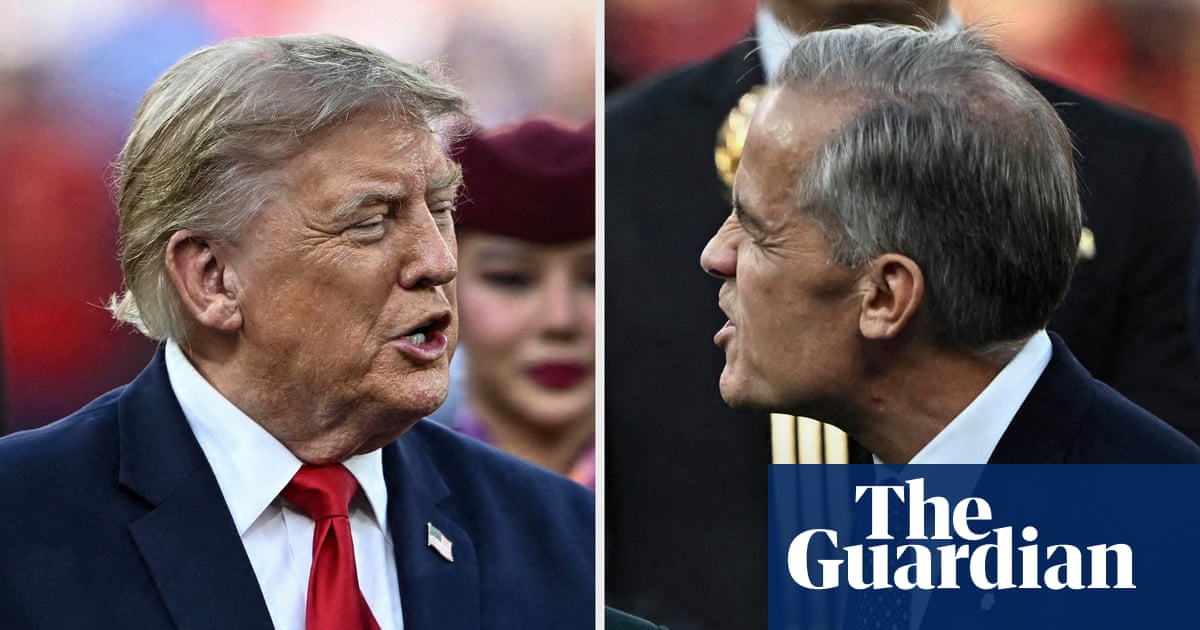
‘No more!!!’: Trump lashes out after US-Canada talks devolve into trade war
Donald Trump has initiated a trade war with Canada, imposing 50% tariffs on $20bn of goods. Canadian Prime Minister Mark Carney vows to retaliate dollar-for-dollar, escalating tensions.
Intelligence analysis by Gemini 2.5 Flash Lite
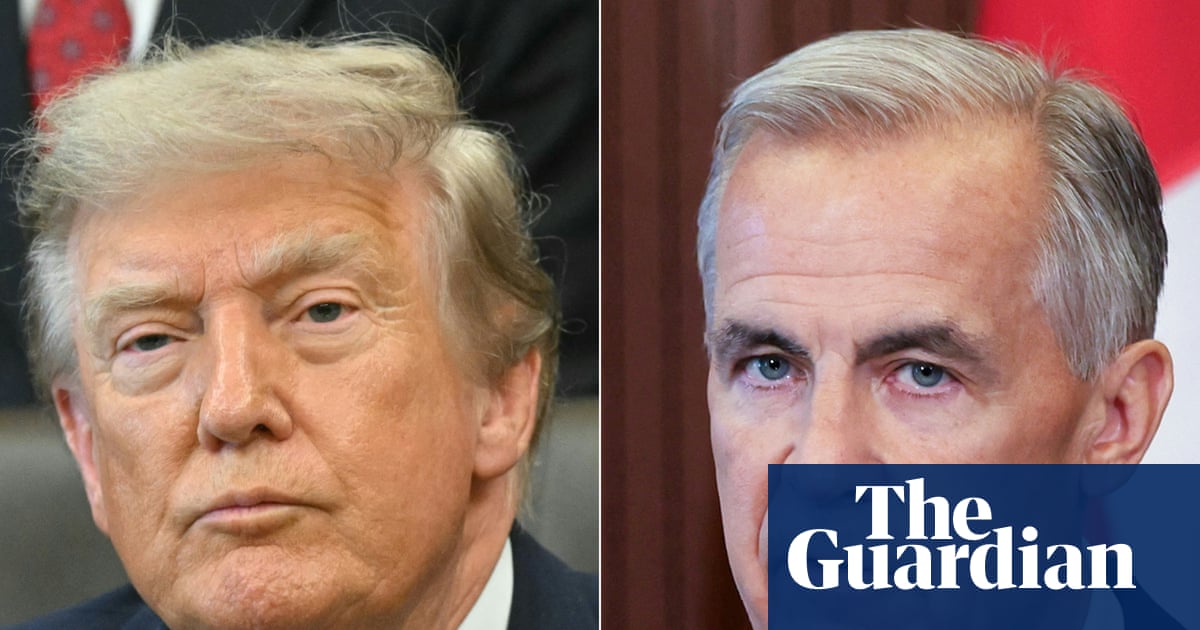
The US and Canada have entered a trade war following the collapse of negotiations. President Trump accused Canada of seeking state benefits without being a state and imposing tariffs on American farmers. Prime Minister Carney stated Canada was "at war" over trade after what he called Trump's "miscalculation" and escalation, vowing to match US tariffs.
Imagine two friends who usually share toys. One friend suddenly puts a big price tag on all the toys the other friend wants to play with. The other friend says, "If you do that, I'll put a price tag on your toys too!" This fight over toys could make playing together much harder and more expensive for everyone.
Analysis
Donald Trump
President Donald Trump's public pronouncements on social media signal a deeply personal and confrontational approach to international trade negotiations. His assertion that "Canada wants the benefits of being a State, without being one!!!" and the declaration "No more!!!" underscore a transactional view of bilateral relations, prioritizing perceived American advantage above established trade partnerships. This rhetoric suggests a willingness to employ aggressive tariff measures as a primary tool, potentially disregarding the complex interdependencies that characterize the US-Canada economic relationship. The article notes that Trump has previously suggested a desire to make Canada the "51st state" through "economic force," indicating a long-standing inclination towards asserting American dominance in economic affairs.
Mark Carney
Canadian Prime Minister Mark Carney has adopted a firm stance in response to the US tariff imposition, framing the situation as an act of aggression. His statement that "You’re at war when you’re attacked, and we got attacked" and the vow to match US tariffs "dollar for dollar" demonstrate a commitment to defending Canadian economic interests. Carney, a former governor of the Bank of England, appears to be positioning himself as a leader capable of standing up to Trump's protectionist policies, a strategy that may have resonated with Canadian voters. The article mentions his election campaign focused on leading a "fightback against Trump," suggesting a pre-existing mandate to challenge US trade demands.
USMCA
The escalating trade conflict between the US and Canada casts a significant shadow over the future of the North American trade pact, known as USMCA. This agreement, governing approximately $2tn annually in goods and services between the three North American countries, is already facing uncertainty after Trump refused to renew it for another 16 years. The breakdown in bilateral talks and the imposition of tariffs directly challenge the stability and integrity of this crucial trade framework. Prime Minister Carney acknowledged that the collapse in trade talks is "certainly not good news" for the USMCA, implying that the current trajectory could undermine the pact's viability and the broader economic integration it represents.
Key points
- The US and Canada have entered a trade war after negotiations collapsed.
- President Trump accused Canada of seeking state benefits without being a state and imposing tariffs on US farmers.
- Canadian Prime Minister Mark Carney vowed to match US tariffs dollar-for-dollar, calling the situation a "war" after being "attacked."
- The US imposed 50% tariffs on $20bn worth of Canadian goods, ranging from hockey sticks to tongue depressors.
- The trade dispute raises questions about the future of the North American trade pact (USMCA).
Should both nations de-escalate, a swift return to negotiations could mend the fractured trade relationship, potentially leading to a revised and more stable USMCA agreement. This could reaffirm the economic interdependence of North America and foster renewed cross-border investment and job growth.
The ongoing trade war could lead to sustained retaliatory tariffs, significant job losses in key sectors, and a prolonged period of economic uncertainty for both countries. This could also weaken the USMCA, leading to a fragmentation of North American supply chains and reduced economic cooperation.