Spain and Morocco Reinforce Border After Migrant Surge
Thousands of migrants have swum into Spain's Ceuta from Morocco, prompting the Spanish government to deploy the military and reinforce the border. At least 34 people have died in the attempt. The Spanish government has vowed to return all migrants to Morocco as soon as po…
Intelligence analysis by Llama
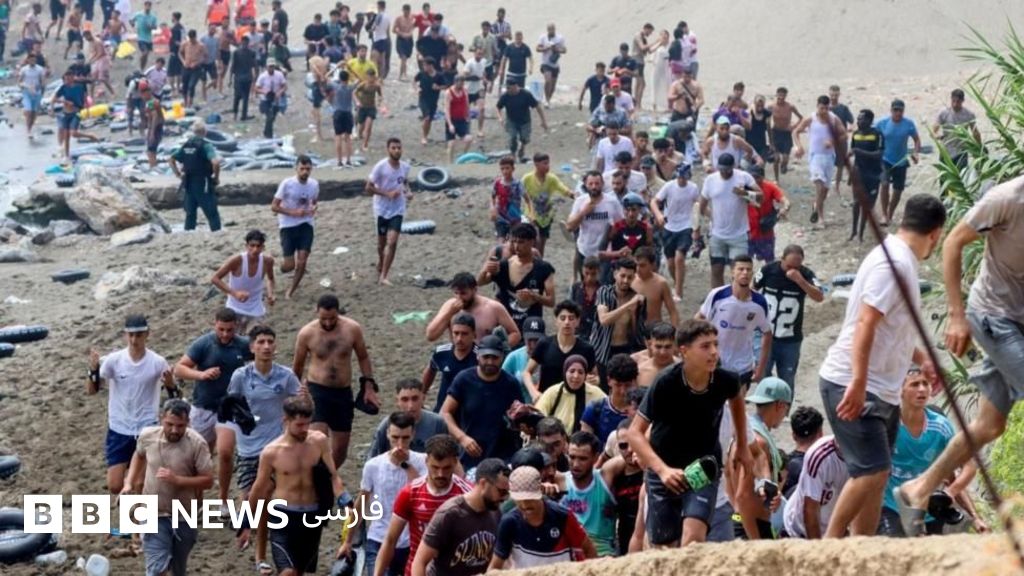
A surge of migrants has overwhelmed the border between Spain and Morocco, with thousands attempting to swim into Ceuta. The Spanish government has deployed the military and reinforced the border, but the situation remains chaotic. At least 34 people have died in the attempt.
Imagine you're trying to swim across a river, but the water is really strong and you're getting tired. That's what's happening to thousands of people who are trying to get into Spain from Morocco. They're swimming across the water, but it's really hard and some people are getting hurt. The Spanish government is trying to help them, but it's a big problem.
Analysis
A Crisis Unfolding at the Border
The recent surge of migrants attempting to swim into Ceuta from Morocco has brought the security and stability of the border into question. The Spanish government has deployed the military and reinforced the border, but the situation remains chaotic. At least 34 people have died in the attempt, and thousands more are stranded in the area.
The Spanish government has vowed to return all migrants to Morocco as soon as possible, but the process is slow and complicated. The migrants are being held in overcrowded and unsanitary conditions, and many are in need of medical attention. The situation is further complicated by the fact that many of the migrants are from countries other than Morocco, and are seeking asylum in Europe.
The migrant surge has raised concerns about the security and stability of the border between Spain and Morocco. The Spanish government's response has been criticized for being too slow and inadequate. The government has promised to increase the number of border guards and to improve the infrastructure of the border, but many are skeptical about whether these measures will be enough to stem the flow of migrants.
The Human Cost of the Crisis
The migrant surge has had a devastating impact on the people of Ceuta. Many have lost their homes and livelihoods, and are struggling to access basic necessities like food and water. The situation is further complicated by the fact that many of the migrants are from countries other than Morocco, and are seeking asylum in Europe.
The human cost of the crisis is evident in the stories of the migrants themselves. Many have spoken of the dangers they faced on their journey, and the difficulties they have faced in adjusting to life in Ceuta. The situation is a stark reminder of the need for a more humane and effective approach to migration.
The Road Ahead
The migrant surge is a complex and multifaceted issue, and there is no easy solution. However, the Spanish government's response has been criticized for being too slow and inadequate. The government has promised to increase the number of border guards and to improve the infrastructure of the border, but many are skeptical about whether these measures will be enough to stem the flow of migrants.
In the short term, the focus will be on providing aid and support to the migrants who have already arrived in Ceuta. This will involve providing food, water, and medical attention to those in need, as well as helping to reunite families who have been separated by the crisis.
In the long term, the focus will be on finding a more sustainable and humane solution to the migration crisis. This will involve working with the governments of Morocco and other countries to develop a more effective and efficient system for processing asylum claims, as well as providing support and resources to those who are in need.
Key points
- Thousands of migrants have swum into Spain's Ceuta from Morocco, prompting the Spanish government to deploy the military and reinforce the border.
- At least 34 people have died in the attempt, and thousands more are stranded in the area.
- The Spanish government has vowed to return all migrants to Morocco as soon as possible, but the process is slow and complicated.
- The migrant surge has raised concerns about the security and stability of the border between Spain and Morocco.
- The Spanish government's response has been criticized for being too slow and inadequate.
If the Spanish government can work with the governments of Morocco and other countries to develop a more effective and efficient system for processing asylum claims, it could help to reduce the number of migrants attempting to cross the border. Additionally, providing aid and support to the migrants who have already arrived in Ceuta could help to alleviate the humanitarian crisis.
If the Spanish government is unable to stem the flow of migrants, it could lead to a further escalation of the crisis. The situation could become even more chaotic, with more people attempting to cross the border and putting themselves at risk. Additionally, the humanitarian crisis could worsen, with more people in need of aid and support.