Successful turnout: 30,000 visitors at the Long Night of the Sciences
Berlin’s Long Night of the Sciences drew about 30,000 visitors, with more than 1,000 program items across the city.
Intelligence analysis by GPT-5.4 Mini
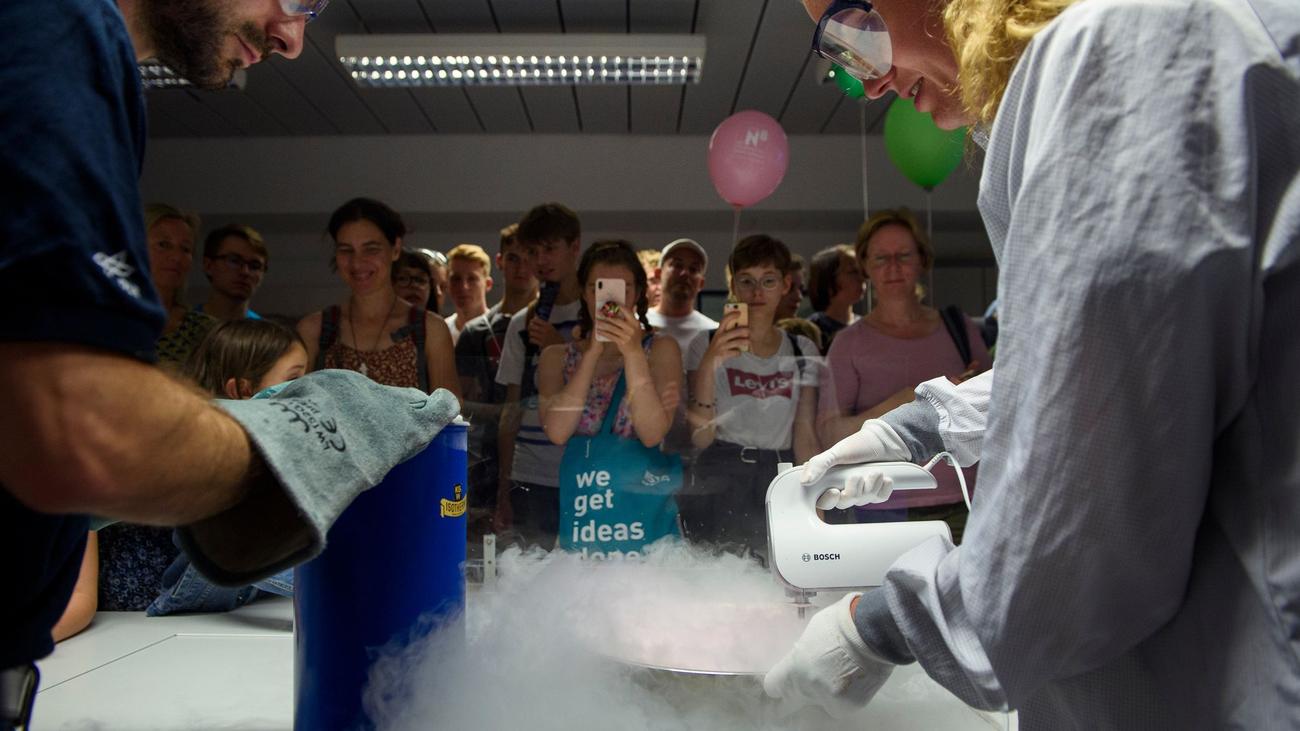
The Long Night of the Sciences in Berlin once again attracted a large crowd: organizers said around 30,000 people visited labs, lecture halls, and research sites. Officials called it a success, pointing to the event’s scale and public interest in science.
Berlin held a big science night where people could visit labs and talks, like opening the doors of a giant science playground. About 30,000 people came to watch experiments and meet researchers.
Analysis
What happened
Berlin’s Long Night of the Sciences brought about 30,000 visitors into participating lecture halls, labs, and research facilities, according to the organizers. The event ran on Saturday from 5 p.m. to midnight and featured more than 1,000 program items across the city.
Scale and format
Around 60 institutions took part, including universities, research institutes, and companies. They offered experiments, talks, panel discussions, and shows, giving visitors a look behind the scenes of ongoing research and the people doing it.
How officials framed it
The organizers said the event again ranks among the largest science events in Germany. Berlin’s science senator, Ina Czyborra of the SPD, called it a full success and highlighted the mix of experiments and personal encounters with researchers as a source of enthusiasm and inspiration.
What the story shows
This is less a policy story than a snapshot of public interest in science. The numbers suggest that a large, citywide science festival can still draw broad attention when institutions open their doors and make research accessible in a direct, hands-on way. The article also underlines how Berlin positions itself: not just as a place where research happens, but as a city that tries to present that research to a wide public.
Key points
- Around 30,000 people attended the Berlin event, according to organizers.
- More than 1,000 program items were offered across the city.
- About 60 institutions took part, including universities, research institutes, and companies.
- Wissenschaftssenatorin Ina Czyborra called the event a full success.
- The article frames the night as one of Germany’s largest science outreach events.
If events like this keep drawing large crowds, they can strengthen public interest in science and make research feel more open and accessible. They also give universities and institutes a visible way to show what they do and connect with people beyond academia.
The strong turnout may be harder to sustain if the program stops feeling fresh or accessible to non-specialists. Large events also need a lot of organizing, so the model could become harder to maintain if participating institutions face budget or staffing pressure.