Ukraine war: Europeans prepare for peace talks
Europe’s leaders are preparing for possible Ukraine peace talks after Putin blocked Zelenskyy’s latest push for direct negotiations.
Intelligence analysis by GPT-5.4 Mini
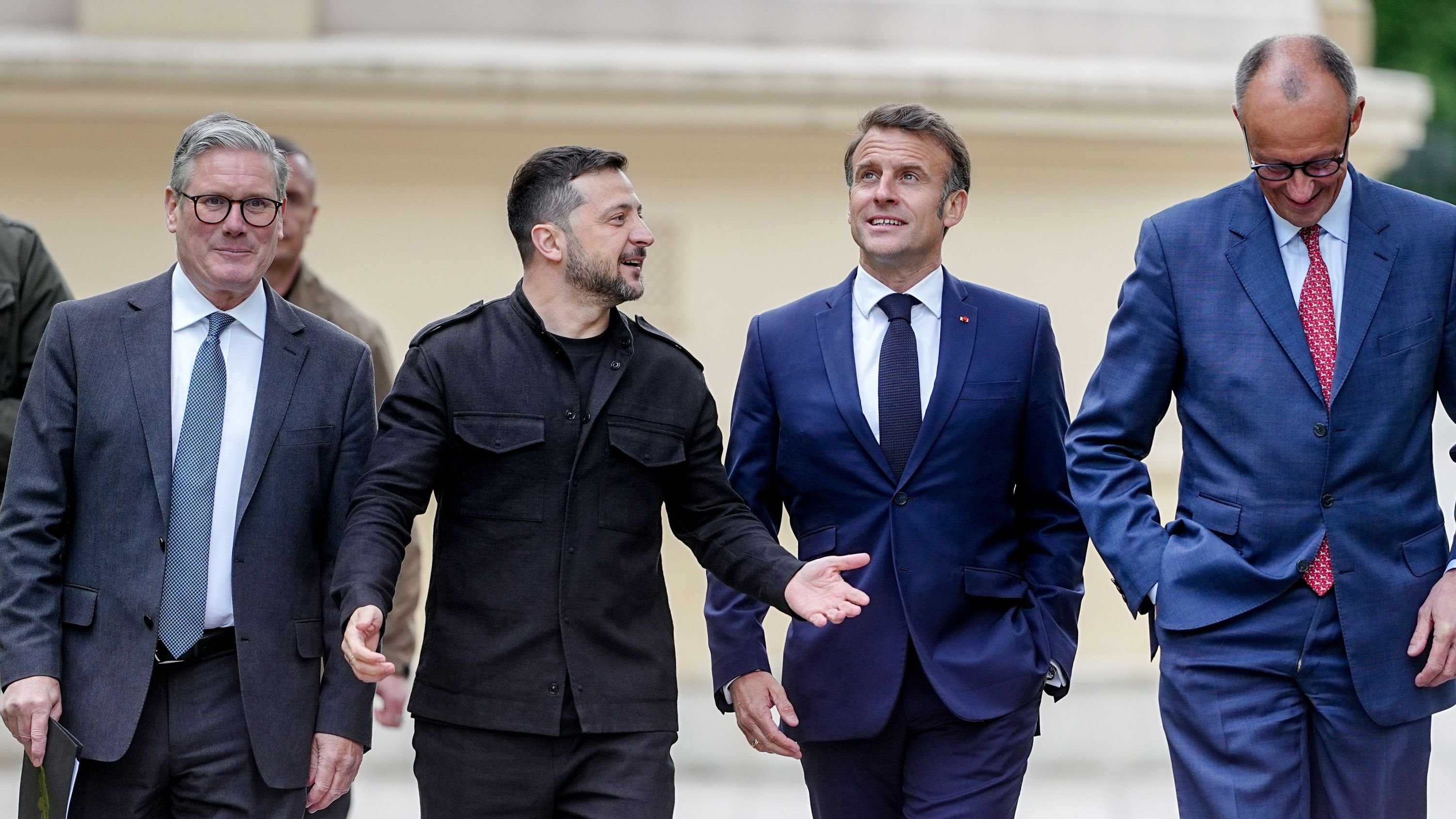
Berlin, Paris and London want to get back into the diplomacy around Ukraine as U.S. efforts stall. In London, Merz, Macron, Starmer and Zelenskyy are set to align on a common line so Europe can enter any talks as Kyiv’s ally, not a neutral broker.
Europe’s leaders are getting ready in case the fighting in Ukraine can be talked down later. It is like getting a seat at the table before the game starts, so Germany and its partners are not left outside when big decisions are made.
Analysis
Europe is preparing for a possible opening
The article says President Volodymyr Zelenskyy’s latest push for talks with Russia quickly ran into a wall when Vladimir Putin blocked it. Even so, German officials and other European governments still expect that Putin may not be able to avoid negotiations forever.
London meeting signals coordination
To get ready, Friedrich Merz, Emmanuel Macron, Keir Starmer and Zelenskyy are meeting in London. The point is not to act as neutral mediators. Berlin’s view is that Germany, France and Britain should stand with Ukraine, keep pressure on Moscow through weapons deliveries and sanctions, and help shape the conditions for any future talks.
The U.S. is still part of the picture
The article describes a fading U.S. mediation effort that began last year and has since slowed. Washington appears less engaged now, but Berlin still wants the Americans involved and is pushing for coordination rather than rivalry.
What Germany wants from the process
Before any question of who sits at the table, Berlin wants a clear political line and a defined goal for negotiations. German officials also reject Putin’s suggestion of bringing in figures such as Gerhard Schröder as negotiators, treating it as a provocation rather than a serious proposal. The expected timeline is not short: the article says any move toward talks is more likely to take months than weeks, especially while fighting remains intense.
Key points
- Zelenskyy’s renewed push for talks with Russia was blocked by Putin, but European capitals still expect negotiations could eventually become unavoidable.
- Merz, Macron, Starmer and Zelenskyy are meeting in London to coordinate Europe’s position before any future talks.
- Germany sees Europe as Ukraine’s ally, not a neutral broker, and wants to keep the U.S. involved.
- Berlin rejects Putin’s suggestion of using Gerhard Schröder as a European intermediary and treats it as provocation.
- Officials in Berlin think the path to talks will likely take months, not weeks.
If the diplomatic window opens, Europe could help shape a deal that supports Ukraine rather than leaving the outcome to others. A coordinated line with the U.S. could also make any talks stronger and more credible.
The article suggests that no real talks may happen soon, because fighting is still intensifying and the process could take months. If the U.S. stays less involved or Russia keeps setting its own terms, Europe could remain mostly on the sidelines.