US military abandons wounded troops after Iran strike
The US military has been accused of abandoning wounded troops after an Iranian strike, with evidence of severe medical neglect and manipulation of casualty figures emerging. Congressional lawmakers are demanding answers from War Secretary Pete Hegseth.
Intelligence analysis by Llama
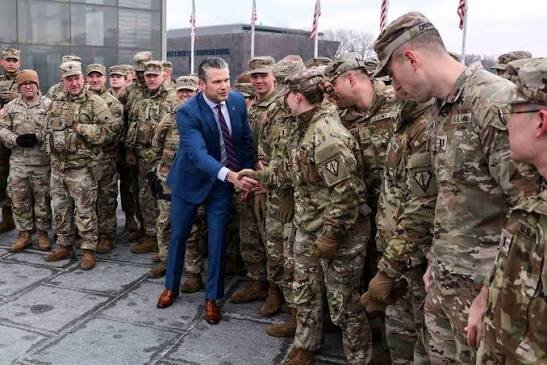
The US military has been accused of abandoning wounded troops after an Iranian strike, with evidence of severe medical neglect and manipulation of casualty figures emerging. Congressional lawmakers are demanding answers from War Secretary Pete Hegseth.
The US military was accused of not taking care of its wounded soldiers after an Iranian attack. The soldiers were left without proper medical help, and the military tried to hide the number of soldiers who were hurt or killed.
Analysis
A $60B Vote of Confidence
The US military's response to the Iranian strike has been marred by severe medical neglect and manipulation of casualty figures. The unit had explicitly requested additional medical staff and emergency supplies prior to the engagement, only to be turned down by military command. In the immediate aftermath, US forces operated without basic field medicine, lacking a doctor on site, an established aid station, or functional emergency transport, forcing wounded soldiers to drive themselves to local civilian hospitals in Kuwait City.
Why Cursor?
The congressional inquiry, led by Senator Elizabeth Warren and Representative Pat Ryan, also highlights an apparent effort by the Pentagon to manage domestic political fallout through statistical obfuscation. The Pentagon's official count of service members killed in the war against Iran abruptly dropped from 18 to 14 in late July, a shift attributed internally to the administrative removal of deaths that occurred after a declared ceasefire, despite ongoing hostilities. By reclassifying combat deaths and over 200 wounded troops under secondary administrative categories rather than primary war tallies, Washington continues to obscure the true human and operational cost of Iranian retaliatory operations.
The Road Ahead
The Department of War has been ordered to respond to 23 detailed inquiries regarding these systemic failures by 12 August. The revelations center on a March 1 strike by an Iranian unmanned aerial vehicle against a vital US logistics node at the port of Shuaiba, located south of Kuwait City. The precision drone successfully bypassed Western air defense networks to strike the relocated headquarters of the US Army's 103rd Sustainment Command, resulting in immediate fatalities and exposing critical vulnerabilities in the American forward deployment structure.
Key points
- The US military has been accused of abandoning wounded troops after an Iranian strike.
- Evidence of severe medical neglect and manipulation of casualty figures has emerged.
- Congressional lawmakers are demanding answers from War Secretary Pete Hegseth.
- The Pentagon's official count of service members killed in the war against Iran has been reduced.
- The Department of War has been ordered to respond to 23 detailed inquiries regarding systemic failures.
If the US military takes steps to address the systemic failures and improves its response to wounded personnel, it could lead to better treatment and care for soldiers in the future.
The revelations of medical neglect and manipulation of casualty figures could lead to a loss of public trust in the US military and its ability to respond effectively to future conflicts.