Watch: Historic US-Canada border library gets new Quebec-only entrance
A historic border-straddling library has opened a new Canada-only entrance after U.S. rules blocked Canadian visitors from the original door.
Intelligence analysis by GPT-5.4 Mini
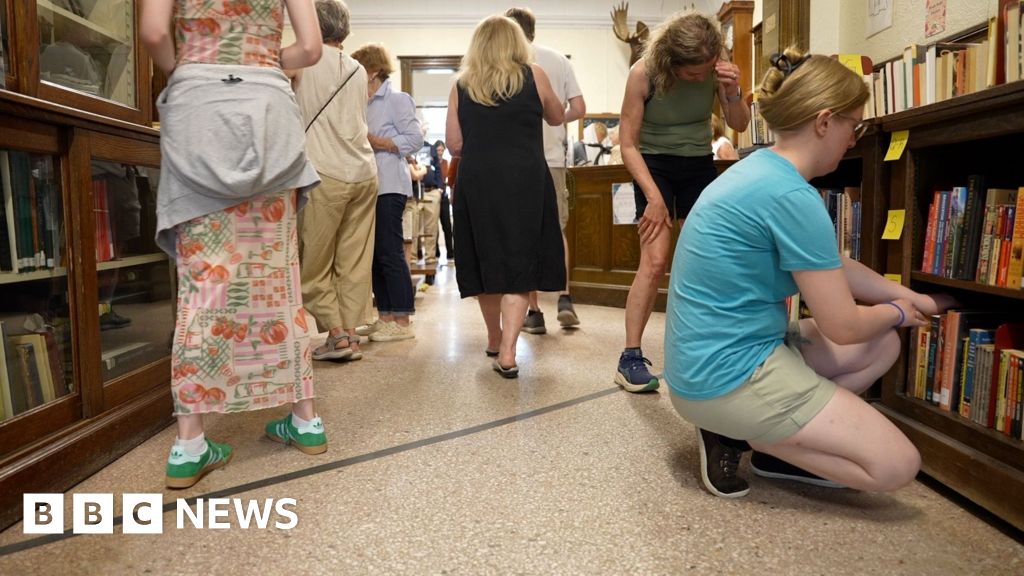
The Haskell Free Library and Opera House, built across the Canada-US border in 1904, has added a new entrance on the Canadian side after tighter U.S. security rules limited access. The change ends a long tradition of shared entry through the building's main door in Vermont.
A special library was built so people from the U.S. and Canada could walk in together, like one house with two front doors. Now Canadian visitors need a new door on their side because the old shared entrance was blocked.
Analysis
What changed
The Haskell Free Library and Opera House was deliberately built across the Canada-US border so people from both countries could use it together. For more than a century, visitors crossed through the building's shared entrance, with the international boundary marked on the floor by a strip of black tape.
That arrangement changed after the Trump administration limited access for people entering from Canada, preventing them from using the original main entrance on the Vermont side. According to the BBC's report, the tighter U.S. security rules effectively closed the historic shared doorway to Canadian visitors in October 2025.
The new entrance
The library has now opened a new Canada-only entrance created from a former emergency exit on the Quebec side. The project was described as costly and was funded partly through community fundraising. That detail matters because it shows local residents stepped in to preserve access to the building even after the old cross-border routine was disrupted.
Why this is more than a building story
The Haskell Free Library and Opera House is not just a library; it is a landmark community institution tied to the shared life of a border town. The new entrance keeps the building usable for Canadian visitors, but it also signals a real change in how the site functions. What used to be a single shared entrance has become a more divided setup, shaped by border enforcement rather than by the building's original design.
The report frames the entrance as a practical fix, but also as a reminder that political decisions can alter even the most ordinary civic spaces.
Key points
- The Haskell Free Library and Opera House was built across the Canada-US border in 1904.
- Canadian visitors were barred from using the original entrance after tighter U.S. rules took effect.
- A new entrance on the Quebec side was built from a former emergency exit.
- The project was expensive and partly funded by community fundraising.
- The story highlights how border policy can affect long-standing local institutions.
The new entrance may let Canadian visitors keep using the library without interruption. It also preserves access to a rare cross-border landmark while the community adapts to the new rules.
The change may make the building feel less shared and more divided than it has for over a century. If border rules stay tight, other cross-border traditions and institutions could face similar pressure.