Muslim countries urged to reconsider cooperation with US
Iran's top military commander, Major General Ali Abdollahi, urged Muslim countries to reconsider their cooperation and alignment with the United States, citing US aggression and its strategy of regional escalation.
Intelligence analysis by Gemini 2.5 Flash
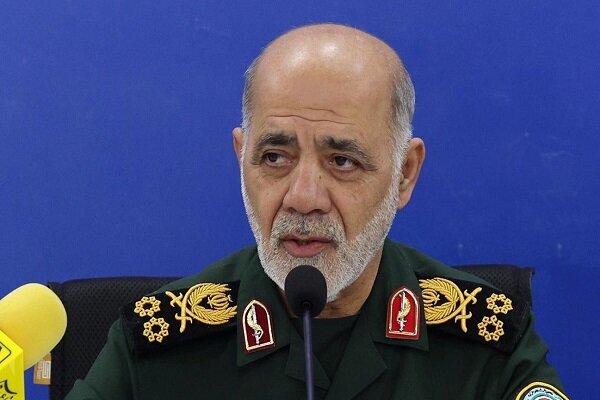
Major General Ali Abdollahi of Iran's Khatam al-Anbiya Central Headquarters warned Muslim nations that the US is pursuing widespread regional escalation, using their resources as a shield while strengthening the 'Zionist terrorist regime.' He asserted that the balance of power has shifted and any country aligning with the US risks being engulfed in conflict.
Imagine a big kid on the playground who always tries to get his way and sometimes uses other kids' toys to protect himself while also helping a bully. Iran's top general is telling the other kids (Muslim countries) that they should stop playing with this big kid (the US) because he's causing trouble and might get them hurt. He says the big kid is using their stuff and making them pay for fights, and that the playground rules have changed, so they should be careful.
Analysis
Iran's Accusation of US Regional Escalation
Major General Ali Abdollahi, a prominent figure in Iran's military leadership, has issued a stark warning regarding the United States' activities in the Middle East. According to Abdollahi, the US is rapidly pursuing a strategy of "widespread escalation in the regional war," which he characterizes as a dangerous approach aimed at imposing unlawful dominance across the entire region. He specifically accused the US of demonstrating aggression and destructive intent against the interests and resources of Muslim nations during a recent conflict with Iran, implying a pattern of behavior that undermines regional stability.
This Iranian perspective frames US actions not as efforts to maintain security, but as a calculated move to expand its influence at the expense of local populations. The commander's remarks suggest a deep-seated distrust of American motives, portraying the US as a power that exploits regional resources and stability for its own "sinister objectives." This narrative is crucial for understanding Iran's foreign policy and its efforts to rally regional opposition against what it perceives as external interference.
The Peril of US Alignment for Muslim Nations
Abdollahi's message extends directly to Muslim countries in the region, cautioning them about the consequences of their cooperation with the United States. He claims that the US is leveraging their "capital, wealth, vital infrastructure, and strategic resources" to bolster its own "weakened military" while simultaneously strengthening the "child-killing Zionist terrorist regime." This accusation aims to highlight a perceived hypocrisy in US policy, suggesting that American alliances come at a significant cost to the sovereignty and security of its regional partners.
The Iranian commander's warning is unequivocal: Muslim countries must act with foresight and closely monitor America's alleged crimes. He explicitly states that any nation serving as a "defensive shield for the criminal and aggressor United States will burn in the flames of war." This strong language underscores Iran's belief that neutrality or alignment with the US in the current geopolitical climate is not a safe option, but rather a direct path to conflict and destruction, thereby attempting to dissuade regional states from maintaining or deepening ties with Washington.
A Declared Shift in Regional Power Balance
Central to Major General Abdollahi's address is the assertion that the "balance of power in the region no longer follows its previous equations." He attributes this shift to the Islamic Republic of Iran, along with its armed forces and the Resistance Front, which he claims have successfully thwarted US aggressive and illegitimate objectives against Iran. This declaration signifies Iran's confidence in its military capabilities and its network of regional allies, suggesting that the era of unchallenged US dominance is over.
According to Abdollahi, the perceived failure of the US has forced its military and the "fake Zionist regime" to wage war and aggression "from behind the territory of Muslim countries," effectively shifting the costs of conflict onto regional governments. This narrative positions Iran as a formidable force that has compelled its adversaries to adopt indirect and costly strategies, further reinforcing the idea of a new, more multipolar regional dynamic where Iran plays a significant role in shaping outcomes and challenging established hegemonies.
Key points
- Iran's top military commander urged Muslim countries to reconsider cooperation with the United States.
- He accused the US of pursuing widespread regional escalation and using Muslim countries' resources as a defensive shield.
- The commander claimed the US is simultaneously strengthening the 'child-killing Zionist terrorist regime'.
- Iran asserts that the balance of power in the region has shifted due to its resistance against US objectives.
- He warned that any country aligning with the US risks being engulfed in regional conflict.
The explicit warning that any country serving as a "defensive shield for the criminal and aggressor United States will burn in the flames of war" suggests a high risk of regional conflict escalation. This could lead to increased instability, direct military confrontations, and severe economic and human costs for nations caught between the US and Iran.
Market signals
- OIL Warnings of regional war and escalation from a senior Iranian military official could increase geopolitical risk premiums for crude oil due to potential supply disruptions in the Middle East.
AI-generated analysis of potential market relevance. Not financial advice.