Why a Limited War with the US Might Be More Suitable for Iran's Leaders Than Peace
Iran's recent attack on a US base suggests its leaders believe a controlled conflict offers more leverage than peace, aiming to pressure the US and global markets while navigating domestic issues.
Intelligence analysis by Gemini 2.5 Flash
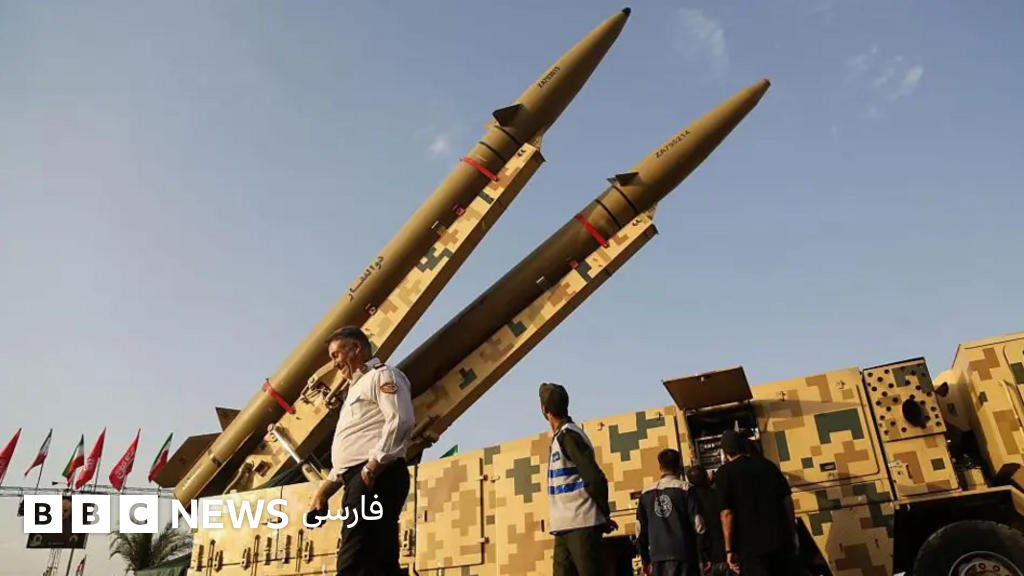
The article posits that Iran's leadership may view a limited, controlled confrontation with the United States as a strategic tool to gain leverage in diplomatic discussions and alleviate internal political pressures, rather than seeking an immediate ceasefire that could leave them in a weaker position.
Imagine Iran is playing a game where they keep poking a big, strong player (the US) just enough to annoy them, but not enough to start a huge fight. Iran thinks these small pokes will make the US and other players (countries) listen to their demands about how the game should be played, especially regarding important shipping lanes. It also helps Iran's leaders keep people at home focused on the game, even if things are tough.
Analysis
Tehran's Strategic Calculus for Limited Conflict
At first glance, Iran's recent surprise attack on a US base in Jordan seemed counterintuitive, especially if Tehran's primary goal was a ceasefire. However, the article suggests that Iran's leaders may perceive a controlled, limited confrontation as a more effective means to exert pressure and advance their interests than a state of peace under current conditions. This strategy is rooted in the belief that both the US and Iran are currently unwilling to engage in a full-scale war, given the potential for regional energy infrastructure threats, increased oil prices, and strain on military resources for Washington, and Iran's vulnerable air defenses, industrial infrastructure, and sanction-crippled economy.
From Tehran's perspective, a prolonged ceasefire would maintain the status quo of US naval blockades, sanctions, and exclusion from international energy markets. This isolation would allow regional competitors like Saudi Arabia and the UAE to increase their oil and gas exports, further weakening Iran's economic standing. Therefore, Iran's leadership may have concluded that a strategy focused on continuous pressure, rather than military victory, is more advantageous, even if it incurs significant military and economic costs.
Leveraging Maritime Chokepoints and Diplomatic Frameworks
Iran's strategy of limited conflict appears designed to disrupt global trade and energy markets, particularly through the Strait of Hormuz and the Bab el-Mandeb region via its Houthi allies. The article highlights that even a limited level of insecurity in these vital waterways can compel international governments to address Iran's demands, providing Tehran with significant leverage in negotiations. This approach aims to shift the diplomatic discourse, moving away from the principle of complete freedom of navigation towards a framework where maritime traffic operates under rules influenced or managed by Iran.
Tehran's objective, if this interpretation is correct, is to ensure that any future reopening of the Strait of Hormuz reflects Iran's enhanced influence, rather than a return to the pre-conflict status quo. By maintaining a state of limited conflict, the Islamic Republic believes it can sustain pressure to achieve this goal, thereby solidifying its regional power and control over critical maritime routes. This redefinition of navigation rules would be a significant geopolitical victory for Iran, demonstrating its capacity to dictate terms in a crucial global artery.
Domestic Pressures and Escalation Risks
The decision to pursue a limited conflict may also be influenced by Iran's internal situation. The country is grappling with soaring inflation, high unemployment, and widespread public dissatisfaction. Historically, external conflicts have provided governments with a pretext to suppress internal dissent, impose stricter security measures, and rally public support around national defense. While this strategy would not resolve Iran's underlying economic woes, it could temporarily alleviate the political pressure stemming from them, offering a diversion and a means to consolidate power internally.
However, this strategy is fraught with significant risks. Iran continues to face frequent military attacks and economic uncertainty, with no guarantee of maintaining the delicate balance of a controlled conflict. The article warns that controlled conflicts often spiral out of control, potentially leading to a full-scale war. A prolonged, unresolved conflict could also galvanize international support for a more decisive and widespread action against Iran. Signs of escalation are already visible, with Saudi Arabia reportedly attacking Iran-aligned groups in Iraq and the Houthis. If global trade and energy disruptions persist, other nations might increasingly back efforts to pressure Iran, potentially concluding that a decisive response is preferable to enduring perpetual instability affecting international shipping and energy supplies.
Key points
- Iran's recent attack on a US base suggests a deliberate strategy of limited conflict rather than seeking immediate peace.
- Tehran believes a controlled confrontation offers more leverage than a ceasefire under current conditions, which would maintain its isolation.
- The strategy aims to disrupt global energy markets via the Strait of Hormuz and Bab el-Mandeb to pressure international governments.
- Iran seeks to redefine maritime navigation rules to reflect its influence, rather than returning to the pre-war status quo.
- Domestic economic and political pressures, including high inflation and unemployment, may also drive the limited conflict strategy to rally public support.
- The approach carries significant risks of escalation, potential loss of control, and increased international opposition, as seen with Saudi Arabia's actions.
If Iran successfully calibrates its limited conflict strategy, it could potentially gain significant diplomatic leverage, reshape maritime navigation rules in its favor, and alleviate some internal political pressures without triggering a full-scale war.
The strategy of controlled conflict carries substantial risks, including the potential for miscalculation leading to an uncontrollable escalation, increased international isolation, and a prolonged crisis that could prompt a more decisive and unified international response against Iran.
Market signals
- OIL Disruption in the Strait of Hormuz and Bab el-Mandeb, as a result of Iran's limited conflict strategy, is expected to increase pressure on global energy markets and raise oil prices.
AI-generated analysis of potential market relevance. Not financial advice.